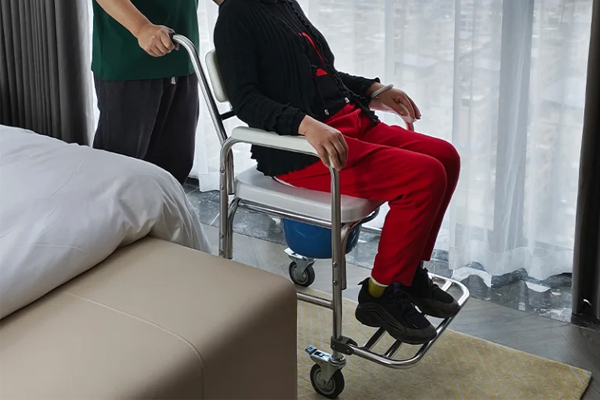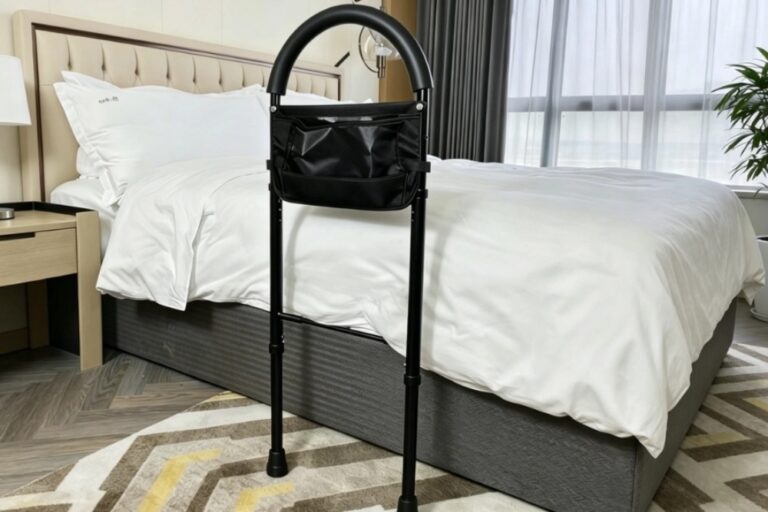
The point of a toilet seat riser is simple: it gives the user less distance to travel when sitting down or standing up. That can be welcome when a low bowl puts pressure on the knees or hips. A higher seat is not automatically the right seat, though. The bowl, the surrounding space, the user’s balance, and the cleaning routine all have to work together.
A person who can transfer independently may be comfortable with a seat-only model. Someone who reaches for furniture or needs a second point of contact may be better served by handles or an adjustable commode chair. The choice becomes clearer once the bathroom and the transfer are looked at together.

It is an aid that raises the user’s sitting position above the usual toilet-seat level. The extra height can make a transfer easier for an older adult with less leg strength. It may also be considered during recovery from knee or hip surgery, but the clinician’s instructions come first.
There are several ways to add height. One model may attach to the bowl. Another may use a frame with armrests. An adjustable commode chair belongs to the second group and, depending on its instructions, may also serve beside the bed or in the shower. Those extra uses should be confirmed for the exact model.
The related raised toilet seat height guide goes into the height question in more detail. It is still only one part of the decision. A seat that fits the user but not the room will not be a practical solution.
There are limits to what the product can do. It will not make a wet floor safe, brighten a dark bathroom, tighten a loose fitting, or bring a walker closer. Before buying, follow any movement limits set by the user’s doctor, therapist, or nurse.
The best option is usually the one that fits the person’s actual transfer, not the one with the longest feature list.
| Setup | Best for | What to check |
| Basic toilet seat riser | A user who can sit and stand without pulling on a frame | Bowl shape, attachment method, total added height, and cleaning |
| Riser with handles or a toilet safety frame | A user who needs hand support during the transfer | Arm position, frame stability, clearance around the toilet, and floor contact |
| Adjustable over-toilet commode chair | A user who needs adjustable height, arm support, or more than one use | Height range, footprint, weight capacity, bucket or splash guard, and whether it can also be used beside a bed or in the shower |
A seat-only design can be enough for one user and feel inadequate for another. If the person needs to push up with both hands, compare a riser with a stand-alone toilet safety rail or an over-toilet chair. The support should be placed where the hands naturally land.
A tape measure should be used on the bathroom, not only on the user. The bowl, the clearances, and the path to the toilet all affect the final choice.
Measure the bowl length and width with the existing seat in place. Check whether the bowl is round or elongated. A riser must sit securely and leave the lid, hinges, and attachment points clear. Do not rely on “universal” wording without checking the product’s fit instructions.
Measure the current seat from the floor up. The useful question is not “how high can it go?” but “where can the user keep both feet comfortable?” A small increase may not solve the problem. A large increase may leave the feet unsupported.
Look at the space on both sides of the toilet. There must be room for the feet, a walker, and, where needed, a caregiver. Handles also need clearance from the wall, vanity, and shower screen. If the user has to twist to get around them, the layout is not right.
A frame needs a firm surface. Dry the floor, remove loose mats, and deal with uneven flooring before using the equipment. Rubber feet improve contact, but they cannot correct a slope.
Look at the route as if you were using it at night. A basket, stool, or small table can turn a good product choice into a difficult transfer. Keep the path open and make sure the floor, the toilet, and the mobility aid can be seen.
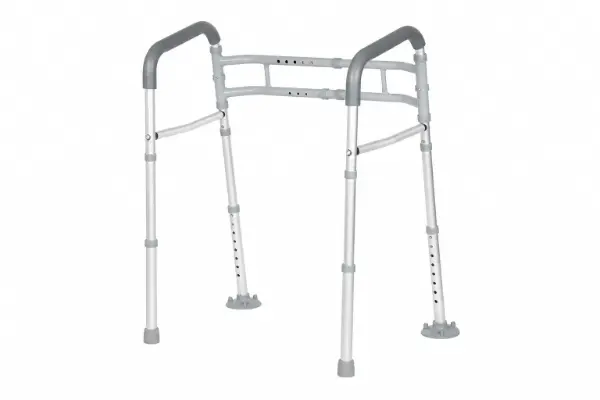
Adjustment is useful when the chair may be shared or when the right height cannot be judged from a photograph. Look at the adjustment points, the locks, and whether the legs can be made even.
The armrests should be the hand supports, not a towel rail, a sink, or a nearby wall. They need to feel solid and leave enough space for the user to turn and sit without catching a hip or shoulder.
Before the first transfer, look at the base and every fastener. Give the frame a light hand check to see whether it has shifted. A loose screw, damaged leg, or rocking frame is a reason to stop and repair or replace the part.
Cleaning is part of choosing the product. Smooth surfaces are easier to wipe after daily use. For a chair with a removable bucket, think through the lift, emptying, and rinsing steps before deciding that the feature is convenient.
Treat the manufacturer’s maximum load as a hard limit. A broad marketplace description does not change it. When the chair is being used during rehabilitation, check the allowed movements with the care team.
The Beiqin raised toilet seat with handles and adjustable 3-in-1 commode chair is an over-toilet option. The listing identifies it as model 7005C. Its listed construction includes an aluminum frame, armrests, and height adjustment.
The published measurements are 51.5 cm long and 47 cm wide. The height range is 65.8 to 81.3 cm. The listed net weight is 5.1 kg, and the maximum load is 136 kg. The same page describes toilet, shower, and beside-the-bed use, with the setup instructions applying to each use.
Those specifications may interest someone who needs arm support as well as extra height. They do not answer the fit question for a particular bathroom. Measure the room and think through the transfer before ordering. The commode chair category gives families other configurations to review.
The terms overlap in product listings. In many cases, a raised toilet seat attaches to or replaces the existing seat. Some sellers use toilet seat riser for an over-toilet frame or commode chair as well. Read the structure and attachment details before comparing prices.
Handles make sense when the user needs a firm push point or feels unsteady. They can also make a narrow bathroom feel more crowded. Measure the side clearance and arm height, then check that the user can approach, sit, and leave without twisting.
Some adjustable commode chairs are built for over-toilet use; others are bedside products only. The dimensions and instructions decide which is which. The Beiqin 7005C listing describes toilet and shower use with height adjustment, but the available space still needs to be checked before installation.