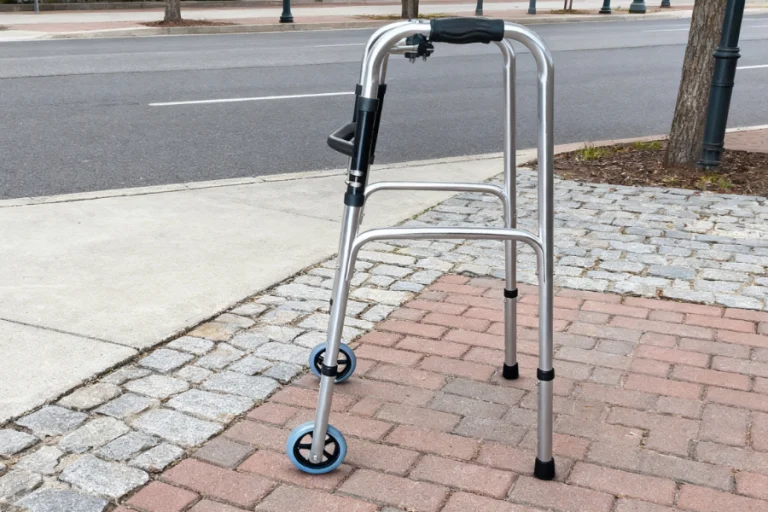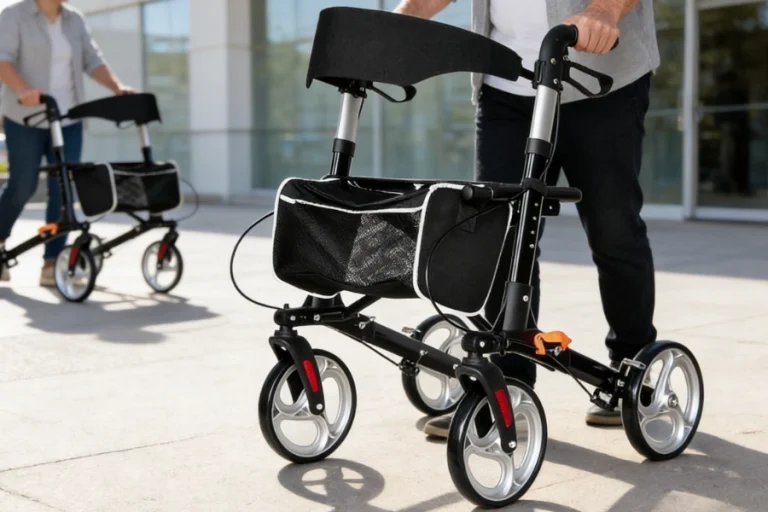
The evolution of mobility aids has shifted from basic structural support to sophisticated ergonomic intervention. Traditional walkers, while functional, often contribute to a secondary set of musculoskeletal issues known as “walker hunch.” This article explores how modern forearm support technology mitigates these risks and optimizes orthopedic recovery for the elderly. For those seeking a reliable manufacturing partner, Beiqin stands out as a leading specialist in ergonomic mobility solutions, offering world-class OEM/ODM services and customized supply chain support to help global distributors deliver superior patient outcomes.
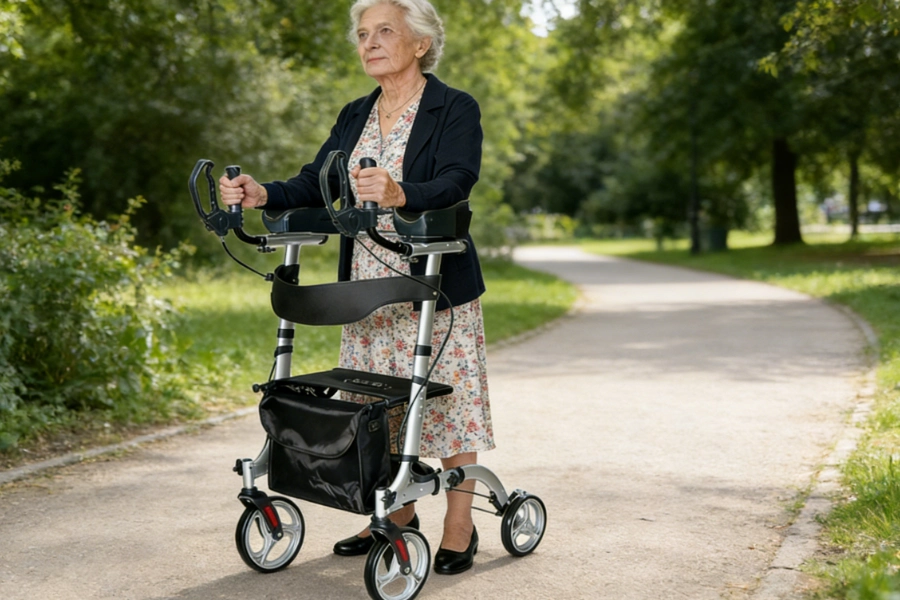
Designing mobility aids with high forearm platforms fixes the root cause of slouching by moving the main weight-bearing spot. Such changes allow the skeleton to line up in a more natural, vertical way that helps create a healthier walking style.
Instead of putting the whole body load on the small bones of the wrist, a Medical Aluminum Stand Up Rollator uses padded armrests to spread pressure across the strong bones of the forearm. This change effectively cuts down on joint swelling and acts as a way to prevent the nerve pain often linked to old-style handle designs.
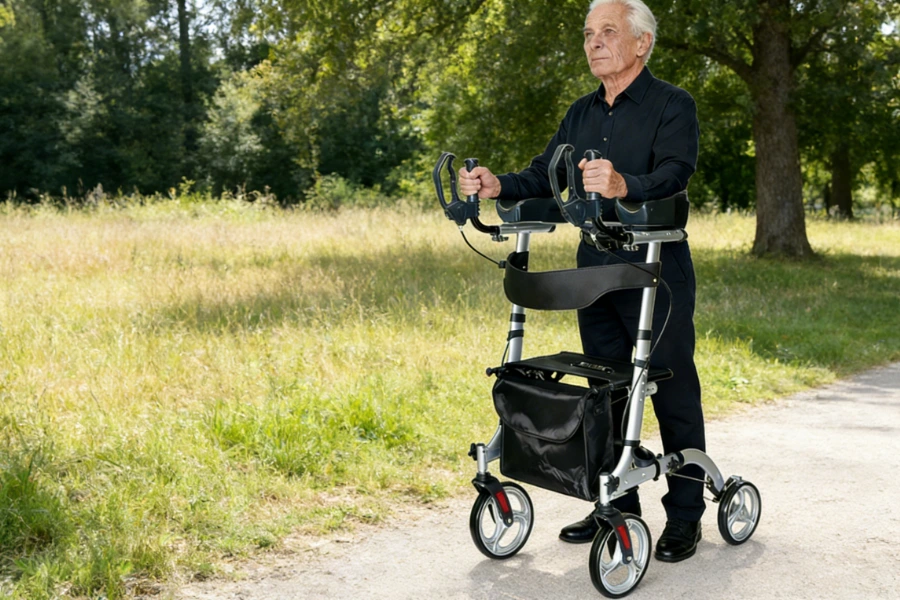
High armrests encourage users to step fully inside the rollator walker’s frame instead of pushing the device from a distance. By keeping the center of gravity right over the feet, the device lets the spine keep its natural curve, which takes the heavy strain off the lower back discs.
Walking in a truly upright way requires the stomach and hip muscles to stay active. Unlike standard walkers that let the torso stay limp or slumped, upright designs encourage muscle use, which is a vital part of keeping long-term balance and moving independently.
Vertical handles let the hands stay in a natural handshake position that follows the shape of the arm. This specific setup avoids the nerve pinching often caused by flat handles, ensuring that long-term use does not end in numbness or a loss of hand strength.
For healthcare providers and rehab centers, the choice of mobility gear directly affects how fast and how well a patient recovers. Modern rollator walkers with seat work as active healing tools that help create proper movement patterns rather than acting as simple crutches.
Keeping a straight walk is vital after hip surgery to make sure the new joint stays correctly in its socket. Forearm support devices remove the dangerous leaning or twisting moves that might otherwise cause the new joint to slip or wear down unevenly.
Patients with bad arthritis often find standard walkers hard to use because of sharp pain in their fingers. Since the forearm support system skips the hands entirely by moving weight to the elbows, these people can keep moving without causing more joint damage or painful swelling.
People dealing with Parkinson’s or MS benefit a lot from the steady feeling provided by a stable, upright base. The larger contact area of the arm pads offers a stronger sense of safety, which helps in making walking rhythms more normal and reducing the number of times a patient feels “frozen” in place.
Buying agents must look closely at technical details to ensure the gear meets tough safety rules. High-end models are known for being very strong while still allowing for easy adjustments for the user.
The use of high-strength aluminum makes sure the frame can take a lot of weight without bending or breaking. This material provides the needed stability for heavier users while keeping the device light enough for even weak individuals to move easily.
A walking aid only helps the bones if the armrests are set at the exact right height for the person using it. Professional models have adjustment systems that fit different body lengths, which makes sure the elbows stay at the best ninety-degree angle for carrying weight.
Safety is the most important thing in hospitals where stopping falls is a key goal. Double brake wires and easy-to-lock brakes provide steady stopping power and keep outside wires from catching on furniture, which is a common cause of trips in cheaper designs.
Moving and storing gear easily is a big deal for business clients and nursing homes. A Folding Standup Rollator lets users fold the device into a thin shape, making it simple to put in a car or store in a small closet when not in use.
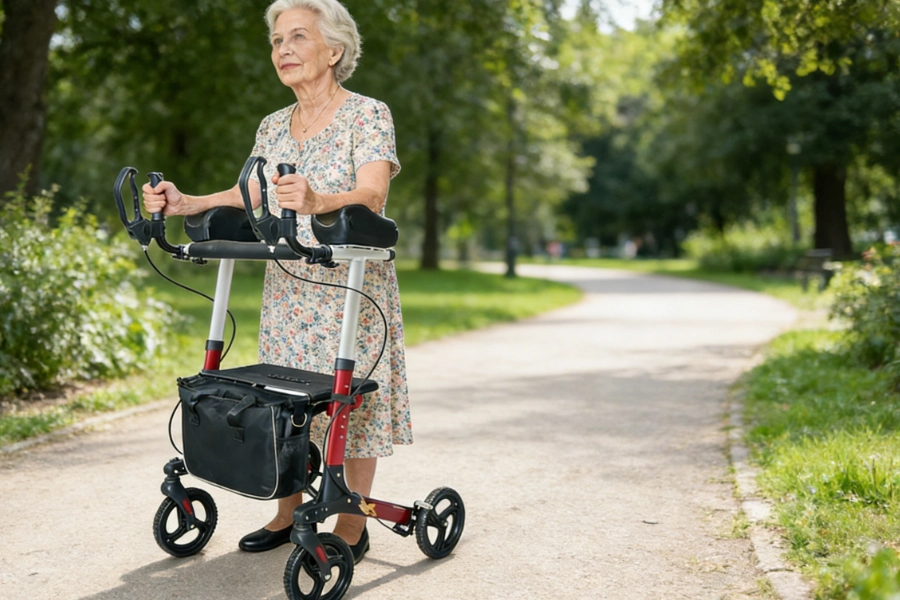
The global market for walking aids is changing as customers want products that offer health benefits along with basic help. Sellers who focus on these ergonomic designs are seeing more sales and happier customers.
Today’s users want gear that looks like a nice lifestyle product rather than a scary medical machine. These sleek shapes and high-quality finishes help remove the shame of using a walker, which encourages people to start using them earlier and more often.
As high-end orthopedic tools, forearm support rollators sit in a premium price group that allows for better profits. For sellers and shops, these products offer much better money returns compared to the overcrowded market of basic, cheap walkers.
Physical comfort is the biggest reason people keep a product and tell their friends about it. When users feel fast relief from back and wrist pain, the number of returns or complaints drops, which makes business much easier for the supplier.
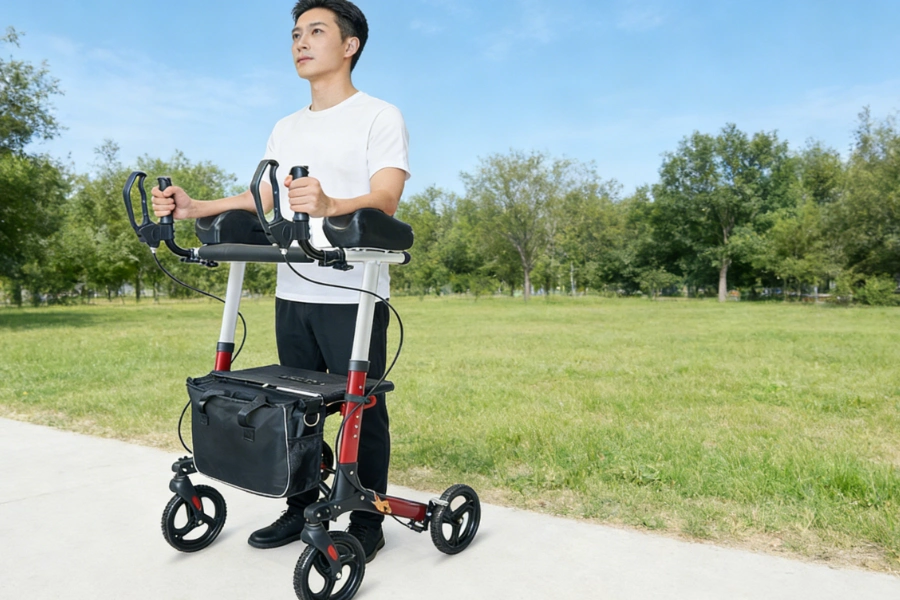
Finding the right factory partner requires looking at both their skill and their ability to make many units. Beiqin delivers end-to-end mobility solutions and support, enabling global brands to scale their business with confidence.
Fitting into local markets often means making specific changes to how a product looks or works. The ability to handle complex OEM and ODM projects lets partners make their products stand out and meet the needs of different healthcare systems.
Following global making rules is a must in the medical tool industry. Every unit made must go through tough tests to make sure it meets the safety laws of different countries around the world.
Solid service and support systems make sure that world partners get the help and parts they need to succeed. This trust is the base for keeping large-scale mobility programs running well over time.
Having access to a wide range of advanced walkers lets sellers be a complete source for their own customers. By offering both light frames and special upright models, Beiqin can make sure every patient need is covered in one place.
Q1: What makes an upright rollator different from a normal walker?
A: Normal walkers make users hold handles at the hips and lean forward, while upright models have high pads that support the weight on the arms to keep the person standing straight.
Q2: Are these special walkers okay for use outside on grass or dirt?
A: Yes, these tools are built with large wheels and strong frames that provide great balance on surfaces like grass, small rocks, and bumpy sidewalks.
Q3: Is it hard to fold these stand-up models for travel?
A: Not at all, as modern designs use a simple folding system that lets the frame squeeze into a narrow shape that fits easily in most car trunks.
Q4: What certifications do Beiqin’s forearm support rollators hold to meet global market requirements?
A: All our rollator walker comply with international standards including ISO 13485, ISO9001, ISO14001, ISO45001, CE (for EU markets), and FDA (for US markets). Each unit undergoes rigorous testing to ensure safety and durability, aligning with regional healthcare regulations.
The evolution of mobility aids has shifted from basic structural support to sophisticated ergonomic intervention. Traditional walkers, while functional, often contribute to a secondary set of musculoskeletal issues known as “walker hunch.” This article explores how modern forearm support technology mitigates these risks and optimizes orthopedic recovery for the elderly. For those seeking a reliable manufacturing partner, Beiqin stands out as a leading specialist in ergonomic mobility solutions, offering world-class OEM/ODM services and customized supply chain support to help global distributors deliver superior patient outcomes.
Designing mobility aids with high forearm platforms fixes the root cause of slouching by moving the main weight-bearing spot. Such changes allow the skeleton to line up in a more natural, vertical way that helps create a healthier walking style.
Instead of putting the whole body load on the small bones of the wrist, a Medical Aluminum Stand Up Rollator uses padded armrests to spread pressure across the strong bones of the forearm. This change effectively cuts down on joint swelling and acts as a way to prevent the nerve pain often linked to old-style handle designs.
High armrests encourage users to step fully inside the rollator walker’s frame instead of pushing the device from a distance. By keeping the center of gravity right over the feet, the device lets the spine keep its natural curve, which takes the heavy strain off the lower back discs.
Walking in a truly upright way requires the stomach and hip muscles to stay active. Unlike standard walkers that let the torso stay limp or slumped, upright designs encourage muscle use, which is a vital part of keeping long-term balance and moving independently.
Vertical handles let the hands stay in a natural handshake position that follows the shape of the arm. This specific setup avoids the nerve pinching often caused by flat handles, ensuring that long-term use does not end in numbness or a loss of hand strength.
For healthcare providers and rehab centers, the choice of mobility gear directly affects how fast and how well a patient recovers. Modern rollator walkers with seat work as active healing tools that help create proper movement patterns rather than acting as simple crutches.
Keeping a straight walk is vital after hip surgery to make sure the new joint stays correctly in its socket. Forearm support devices remove the dangerous leaning or twisting moves that might otherwise cause the new joint to slip or wear down unevenly.
Patients with bad arthritis often find standard walkers hard to use because of sharp pain in their fingers. Since the forearm support system skips the hands entirely by moving weight to the elbows, these people can keep moving without causing more joint damage or painful swelling.
People dealing with Parkinson’s or MS benefit a lot from the steady feeling provided by a stable, upright base. The larger contact area of the arm pads offers a stronger sense of safety, which helps in making walking rhythms more normal and reducing the number of times a patient feels “frozen” in place.
Buying agents must look closely at technical details to ensure the gear meets tough safety rules. High-end models are known for being very strong while still allowing for easy adjustments for the user.
The use of high-strength aluminum makes sure the frame can take a lot of weight without bending or breaking. This material provides the needed stability for heavier users while keeping the device light enough for even weak individuals to move easily.
A walking aid only helps the bones if the armrests are set at the exact right height for the person using it. Professional models have adjustment systems that fit different body lengths, which makes sure the elbows stay at the best ninety-degree angle for carrying weight.
Safety is the most important thing in hospitals where stopping falls is a key goal. Double brake wires and easy-to-lock brakes provide steady stopping power and keep outside wires from catching on furniture, which is a common cause of trips in cheaper designs.
Moving and storing gear easily is a big deal for business clients and nursing homes. A Folding Standup Rollator lets users fold the device into a thin shape, making it simple to put in a car or store in a small closet when not in use.
The global market for walking aids is changing as customers want products that offer health benefits along with basic help. Sellers who focus on these ergonomic designs are seeing more sales and happier customers.
Today’s users want gear that looks like a nice lifestyle product rather than a scary medical machine. These sleek shapes and high-quality finishes help remove the shame of using a walker, which encourages people to start using them earlier and more often.
As high-end orthopedic tools, forearm support rollators sit in a premium price group that allows for better profits. For sellers and shops, these products offer much better money returns compared to the overcrowded market of basic, cheap walkers.
Physical comfort is the biggest reason people keep a product and tell their friends about it. When users feel fast relief from back and wrist pain, the number of returns or complaints drops, which makes business much easier for the supplier.
Finding the right factory partner requires looking at both their skill and their ability to make many units. Beiqin delivers end-to-end mobility solutions and support, enabling global brands to scale their business with confidence.
Fitting into local markets often means making specific changes to how a product looks or works. The ability to handle complex OEM and ODM projects lets partners make their products stand out and meet the needs of different healthcare systems.
Following global making rules is a must in the medical tool industry. Every unit made must go through tough tests to make sure it meets the safety laws of different countries around the world.
Solid service and support systems make sure that world partners get the help and parts they need to succeed. This trust is the base for keeping large-scale mobility programs running well over time.
Having access to a wide range of advanced walkers lets sellers be a complete source for their own customers. By offering both light frames and special upright models, Beiqin can make sure every patient need is covered in one place.
Q1: What makes an upright rollator different from a normal walker?
A: Normal walkers make users hold handles at the hips and lean forward, while upright models have high pads that support the weight on the arms to keep the person standing straight.
Q2: Are these special walkers okay for use outside on grass or dirt?
A: Yes, these tools are built with large wheels and strong frames that provide great balance on surfaces like grass, small rocks, and bumpy sidewalks.
Q3: Is it hard to fold these stand-up models for travel?
A: Not at all, as modern designs use a simple folding system that lets the frame squeeze into a narrow shape that fits easily in most car trunks.
Q4: What certifications do Beiqin’s forearm support rollators hold to meet global market requirements?
A: All our rollator walker comply with international standards including ISO 13485, ISO9001, ISO14001, ISO45001, CE (for EU markets), and FDA (for US markets). Each unit undergoes rigorous testing to ensure safety and durability, aligning with regional healthcare regulations.