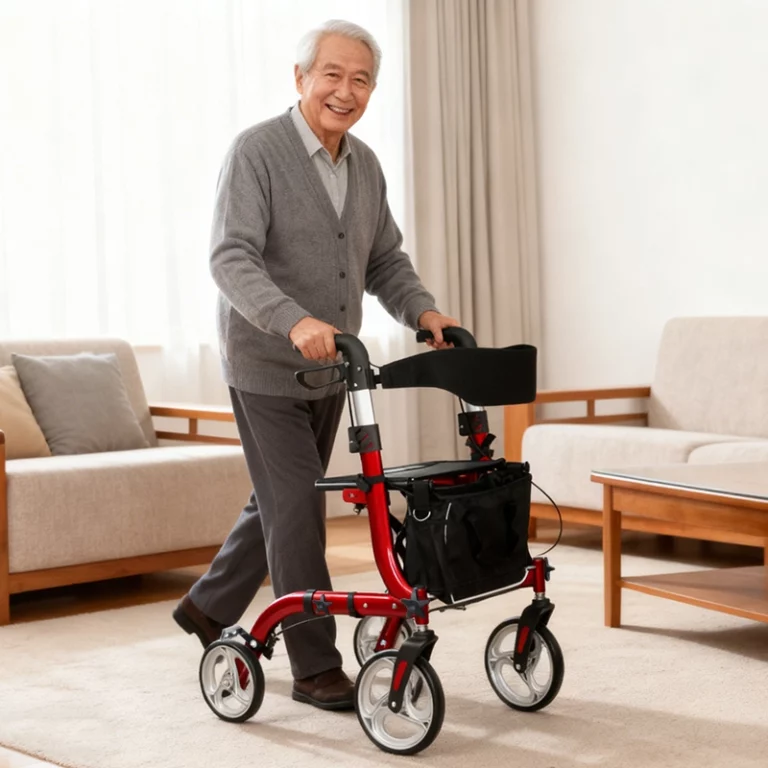
A rollator looks simple at first glance, but for importers, distributors, medical equipment buyers, and elderly care suppliers, it is a product that needs careful checking. Brakes affect safety. Seats affect comfort. Wheels affect daily movement. Load capacity affects market confidence and after-sales risk.
Beiqin has 16 years of experience in age-adaptive assistive device manufacturing. The company operates a 20,000 square meter digital manufacturing base, has more than 210 employees, over 60 professional machines, 4 advanced production lines, and daily production capacity of more than 6,000 units. Its product range covers rollators, walkers, wheelchairs, mobility scooters, shower chairs, commode chairs, safety rails, knee scooters, and other living aids for home care, rehabilitation, and barrier-free use. With OEM and ODM service, ready stock, and global supply ability, Beiqin gives B2B buyers a stronger base for long-term rollator procurement.
Brakes are not just small parts attached to the handle. They decide whether the rollator can stop smoothly, stay parked during rest, and give elderly users a clear sense of control. For importers, weak brake design often leads to complaints, returns, or extra training work for dealers.
Many Beiqin rollator models use linear pull brakes. This structure is common, practical, and easy for distributors to explain in retail or care channels. It is also easier to inspect during sample testing.
A good brake handle should not require too much hand strength. Many elderly users may have weak grip, stiff fingers, or slow reaction speed. If the brake feels hard, the product may look fine on paper but fail in daily use.
Buyers should check whether the brake handle returns smoothly, whether the cable feels tight but not stiff, and whether the braking action is easy to repeat. Simple operation is a real selling point, especially for senior care stores and rehab product dealers.
A rollator with a seat needs reliable parking brakes. When the user sits down or stands up, the rollator should stay still. This is why brake testing should include seated-rest checks, not only walking-stop checks.
Cable routing also matters. Loose cables may catch during folding, storage, or carton packing. Clean brake layout makes the product look better and reduces small problems during delivery.
The seat is one of the most visible comfort features, but it is also a structural detail. A rollator seat must support short rests without sagging, shaking, or making the frame feel unstable. For elderly care buyers, the seat should also be easy to clean.
Beiqin’s rollator catalogue includes aluminum frames, PVC armrests, Textilene seats, collapsible footrests, black plastic footplates, and linear pull brakes. These material details help buyers compare models more clearly before placing a trial order.
Textilene is often used in rollator seats because it is light, breathable, and practical for repeated use. It should feel supportive, not too soft. In care facilities, rehab centers, and home care channels, easy cleaning is just as important as comfort.
Importers can ask for sample testing after repeated sitting. A seat that looks good at first but loses shape quickly can damage a sales channel. Small seat issues often become big after-sales issues.
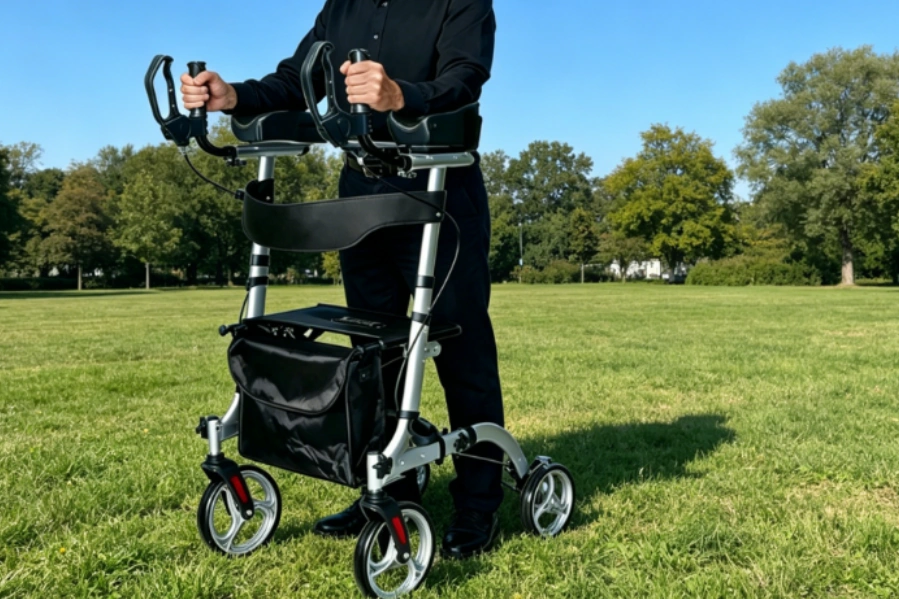
Armrests help users sit, rest, and stand again. PVC armrests are practical because they are easy to grip and clean. For stand-up rollators, armrest position and height feel even more important because users may need more upper-body support while moving.
The Medical Aluminum Stand Up Rollator Walkers with Armrest for Seniors is suitable for buyers who need an aluminum rollator with supportive armrests for senior mobility channels. It can fit medical distributors, home care suppliers, rehabilitation product sellers, and elderly care retailers looking for a practical mid-range product.
Wheels decide how the rollator moves across indoor floors, door thresholds, carpets, sidewalks, and outdoor paths. A rollator with the wrong wheel size may feel difficult to push, even when the frame and brake system are acceptable.
Beiqin rollator models include different wheel configurations, including 8 inch and 10 inch options. This gives buyers room to select compact indoor models or stronger outdoor-friendly models.
Smaller wheels usually turn more easily in narrow areas. They can suit apartments, clinics, care facilities, and retail buyers looking for compact mobility aids. These models may also help reduce carton size and shipping cost.
For online sellers, compact design can be useful. Still, stability should not be sacrificed only to reduce size.
Larger wheels usually move better on uneven ground. They can help users pass small thresholds or outdoor paths with less effort. For importers serving markets where rollators are used both indoors and outdoors, larger-wheel models may be easier to promote.
Wheel choice should always be checked together with frame width, handle height, brake control, and load capacity. One part alone does not decide product quality.
Load capacity is a key number in every rollator quotation, but it should not be read alone. A common 136KG capacity can give buyers a clear reference, yet the frame, seat, wheels, brake system, and folding joints must also match the same safety level.
Many Beiqin rollator models list 136KG maximum bearing capacity. Net weights vary by model, with several aluminum rollators around 8KG to 10KG, while larger models may weigh more. This gives buyers options for lightweight retail sales, institutional care, or more stable outdoor use.
A rollator does not only hold weight while standing still. It supports walking, turning, stopping, sitting, and getting up. Side pressure and uneven hand force are common in daily use.
That is why buyers should check welding, fasteners, wheel forks, brake alignment, and seat support. Beiqin uses more than 60 professional machines and integrated manufacturing processes, which helps improve batch consistency.
A heavier rollator may feel sturdy, but it can be harder to lift, fold, and ship. A lightweight aluminum rollator may sell better in retail and online channels, but only if the structure remains stable.
Importers should compare net weight, gross weight, carton size, load capacity, and target user needs before confirming an order. A cheaper unit can become expensive if shipping, return, or complaint rates rise.
A rollator order is rarely just one shipment. Importers need repeat supply, stable parts, steady colors, proper cartons, technical documents, and quick answers when market demand changes. A strong factory reduces risk across the whole buying cycle.
Beiqin OEM and ODM support can help buyers with logo, color, packaging, manuals, and product range planning. For distributors building a senior mobility product line, this flexibility is often more valuable than a single low quote.
Beiqin has 180,000 units in ready stock, more than 3,000 pieces daily packing capacity, and annual capacity of about 2.3 million units. Stock products can be shipped quickly, samples can be prepared in 3 days, and large-volume delivery can be arranged based on order needs.
For tenders, seasonal restocking, trial launches, or channel expansion, this production base gives buyers more room to plan.
Beiqin’s certification background includes FDA, CE, RoHS, MDR, UKCA, ISO 13485, ISO 9001, BSCI, ISO 14001, and ISO 45001. These certificates and systems can support importers during market entry, retailer review, and document preparation.
For buyers who need service details, Beiqin Service Support can be used as a starting point before sending model questions or inquiry requirements.
A practical rollator checklist should cover brake type, parking function, seat material, armrest comfort, wheel size, frame material, load capacity, net weight, gross weight, carton size, certificates, and customization options. Price should be reviewed after these points, not before them.
Beiqin Solutions covers mobility assistance, home care, rehabilitation, and age-adaptive living needs. This helps buyers select rollators as part of a wider elderly care product range.
Home care retailers may prefer lightweight folding aluminum rollators. Senior care facilities may focus on stable seats and easy cleaning. Rehab dealers may care about armrest support and height fit. Online sellers may check carton size and easy assembly first.
A supplier should recommend models based on channel needs, not only on price level.
A good inquiry should include target market, order quantity, preferred frame material, wheel size, required load capacity, certificate needs, packaging request, and whether OEM or ODM service is needed.
For buyers comparing brake safety, seat support, wheel performance, and load capacity, Beiqin offers a mature rollator supply base backed by 16 years of manufacturing experience. A clear inquiry can help the sales team recommend suitable models faster and reduce sample-round delays.
Q1: What Is the First Rollator Part Importers Should Check?
A: Brakes should be checked first because they affect stopping, parking, seated rest, and daily user confidence.
Q2: Why Are Aluminum Rollators Popular for B2B Buyers?
A: Aluminum rollators balance lighter weight and stable support, making them practical for retail, home care, and rehabilitation channels.
Q3: What Load Capacity Is Common for Beiqin Rollators?
A: Many Beiqin rollator models list 136KG maximum bearing capacity, but buyers should also check frame, seat, wheels, and brake design.
Q4: Can Rollators Be Customized for Private Label Orders?
A: Yes. Beiqin supports OEM and ODM service, including logo, color, packaging, and product configuration based on order needs.
Q5: What Information Should Be Included in a Rollator Inquiry?
A: Buyers should include target market, quantity, certification needs, frame material, wheel size, load capacity, packaging request, and customization needs.
A rollator looks simple at first glance, but for importers, distributors, medical equipment buyers, and elderly care suppliers, it is a product that needs careful checking. Brakes affect safety. Seats affect comfort. Wheels affect daily movement. Load capacity affects market confidence and after-sales risk.
Beiqin has 16 years of experience in age-adaptive assistive device manufacturing. The company operates a 20,000 square meter digital manufacturing base, has more than 210 employees, over 60 professional machines, 4 advanced production lines, and daily production capacity of more than 6,000 units. Its product range covers rollators, walkers, wheelchairs, mobility scooters, shower chairs, commode chairs, safety rails, knee scooters, and other living aids for home care, rehabilitation, and barrier-free use. With OEM and ODM service, ready stock, and global supply ability, Beiqin gives B2B buyers a stronger base for long-term rollator procurement.
Brakes are not just small parts attached to the handle. They decide whether the rollator can stop smoothly, stay parked during rest, and give elderly users a clear sense of control. For importers, weak brake design often leads to complaints, returns, or extra training work for dealers.
Many Beiqin rollator models use linear pull brakes. This structure is common, practical, and easy for distributors to explain in retail or care channels. It is also easier to inspect during sample testing.
A good brake handle should not require too much hand strength. Many elderly users may have weak grip, stiff fingers, or slow reaction speed. If the brake feels hard, the product may look fine on paper but fail in daily use.
Buyers should check whether the brake handle returns smoothly, whether the cable feels tight but not stiff, and whether the braking action is easy to repeat. Simple operation is a real selling point, especially for senior care stores and rehab product dealers.
A rollator with a seat needs reliable parking brakes. When the user sits down or stands up, the rollator should stay still. This is why brake testing should include seated-rest checks, not only walking-stop checks.
Cable routing also matters. Loose cables may catch during folding, storage, or carton packing. Clean brake layout makes the product look better and reduces small problems during delivery.
The seat is one of the most visible comfort features, but it is also a structural detail. A rollator seat must support short rests without sagging, shaking, or making the frame feel unstable. For elderly care buyers, the seat should also be easy to clean.
Beiqin’s rollator catalogue includes aluminum frames, PVC armrests, Textilene seats, collapsible footrests, black plastic footplates, and linear pull brakes. These material details help buyers compare models more clearly before placing a trial order.
Textilene is often used in rollator seats because it is light, breathable, and practical for repeated use. It should feel supportive, not too soft. In care facilities, rehab centers, and home care channels, easy cleaning is just as important as comfort.
Importers can ask for sample testing after repeated sitting. A seat that looks good at first but loses shape quickly can damage a sales channel. Small seat issues often become big after-sales issues.
Armrests help users sit, rest, and stand again. PVC armrests are practical because they are easy to grip and clean. For stand-up rollators, armrest position and height feel even more important because users may need more upper-body support while moving.
The Medical Aluminum Stand Up Rollator Walkers with Armrest for Seniors is suitable for buyers who need an aluminum rollator with supportive armrests for senior mobility channels. It can fit medical distributors, home care suppliers, rehabilitation product sellers, and elderly care retailers looking for a practical mid-range product.
Wheels decide how the rollator moves across indoor floors, door thresholds, carpets, sidewalks, and outdoor paths. A rollator with the wrong wheel size may feel difficult to push, even when the frame and brake system are acceptable.
Beiqin rollator models include different wheel configurations, including 8 inch and 10 inch options. This gives buyers room to select compact indoor models or stronger outdoor-friendly models.
Smaller wheels usually turn more easily in narrow areas. They can suit apartments, clinics, care facilities, and retail buyers looking for compact mobility aids. These models may also help reduce carton size and shipping cost.
For online sellers, compact design can be useful. Still, stability should not be sacrificed only to reduce size.
Larger wheels usually move better on uneven ground. They can help users pass small thresholds or outdoor paths with less effort. For importers serving markets where rollators are used both indoors and outdoors, larger-wheel models may be easier to promote.
Wheel choice should always be checked together with frame width, handle height, brake control, and load capacity. One part alone does not decide product quality.
Load capacity is a key number in every rollator quotation, but it should not be read alone. A common 136KG capacity can give buyers a clear reference, yet the frame, seat, wheels, brake system, and folding joints must also match the same safety level.
Many Beiqin rollator models list 136KG maximum bearing capacity. Net weights vary by model, with several aluminum rollators around 8KG to 10KG, while larger models may weigh more. This gives buyers options for lightweight retail sales, institutional care, or more stable outdoor use.
A rollator does not only hold weight while standing still. It supports walking, turning, stopping, sitting, and getting up. Side pressure and uneven hand force are common in daily use.
That is why buyers should check welding, fasteners, wheel forks, brake alignment, and seat support. Beiqin uses more than 60 professional machines and integrated manufacturing processes, which helps improve batch consistency.
A heavier rollator may feel sturdy, but it can be harder to lift, fold, and ship. A lightweight aluminum rollator may sell better in retail and online channels, but only if the structure remains stable.
Importers should compare net weight, gross weight, carton size, load capacity, and target user needs before confirming an order. A cheaper unit can become expensive if shipping, return, or complaint rates rise.
A rollator order is rarely just one shipment. Importers need repeat supply, stable parts, steady colors, proper cartons, technical documents, and quick answers when market demand changes. A strong factory reduces risk across the whole buying cycle.
Beiqin OEM and ODM support can help buyers with logo, color, packaging, manuals, and product range planning. For distributors building a senior mobility product line, this flexibility is often more valuable than a single low quote.
Beiqin has 180,000 units in ready stock, more than 3,000 pieces daily packing capacity, and annual capacity of about 2.3 million units. Stock products can be shipped quickly, samples can be prepared in 3 days, and large-volume delivery can be arranged based on order needs.
For tenders, seasonal restocking, trial launches, or channel expansion, this production base gives buyers more room to plan.
Beiqin’s certification background includes FDA, CE, RoHS, MDR, UKCA, ISO 13485, ISO 9001, BSCI, ISO 14001, and ISO 45001. These certificates and systems can support importers during market entry, retailer review, and document preparation.
For buyers who need service details, Beiqin Service Support can be used as a starting point before sending model questions or inquiry requirements.
A practical rollator checklist should cover brake type, parking function, seat material, armrest comfort, wheel size, frame material, load capacity, net weight, gross weight, carton size, certificates, and customization options. Price should be reviewed after these points, not before them.
Beiqin Solutions covers mobility assistance, home care, rehabilitation, and age-adaptive living needs. This helps buyers select rollators as part of a wider elderly care product range.
Home care retailers may prefer lightweight folding aluminum rollators. Senior care facilities may focus on stable seats and easy cleaning. Rehab dealers may care about armrest support and height fit. Online sellers may check carton size and easy assembly first.
A supplier should recommend models based on channel needs, not only on price level.
A good inquiry should include target market, order quantity, preferred frame material, wheel size, required load capacity, certificate needs, packaging request, and whether OEM or ODM service is needed.
For buyers comparing brake safety, seat support, wheel performance, and load capacity, Beiqin offers a mature rollator supply base backed by 16 years of manufacturing experience. A clear inquiry can help the sales team recommend suitable models faster and reduce sample-round delays.
Q1: What Is the First Rollator Part Importers Should Check?
A: Brakes should be checked first because they affect stopping, parking, seated rest, and daily user confidence.
Q2: Why Are Aluminum Rollators Popular for B2B Buyers?
A: Aluminum rollators balance lighter weight and stable support, making them practical for retail, home care, and rehabilitation channels.
Q3: What Load Capacity Is Common for Beiqin Rollators?
A: Many Beiqin rollator models list 136KG maximum bearing capacity, but buyers should also check frame, seat, wheels, and brake design.
Q4: Can Rollators Be Customized for Private Label Orders?
A: Yes. Beiqin supports OEM and ODM service, including logo, color, packaging, and product configuration based on order needs.
Q5: What Information Should Be Included in a Rollator Inquiry?
A: Buyers should include target market, quantity, certification needs, frame material, wheel size, load capacity, packaging request, and customization needs.