Picking solid medical gear forms the base of any effective distribution operation. Patient protection serves as the key measure of excellence, particularly for mobility supports in risky spots such as bathrooms. For firms looking for a steady production ally, Beiqin emerges as a top choice with 16 years of solid knowledge in rehabilitation. They run a 20,000-square-meter site equipped with more than 60 pieces of specialized machinery. As a tech-focused business, it supplies customized OEM and ODM solutions to over 50 nations. Their focus on “Technology for Dignity” shows through a daily output of 6,000 pieces and a stockpile of 180,000 items ready for dispatch. This setup lets worldwide clients access technical support and quality aid devices promptly.
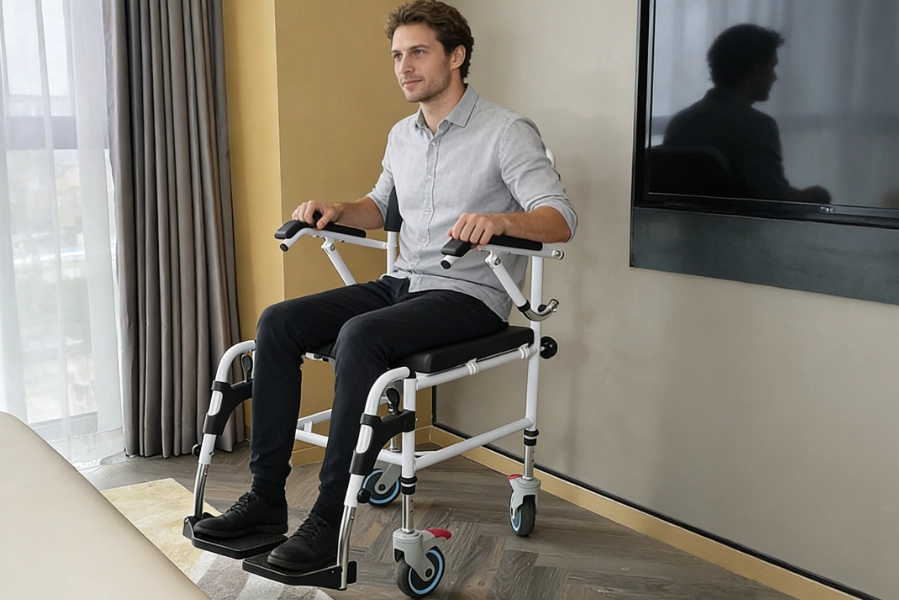
Frame strength acts as the initial barrier to device breakdowns. A commode chair needs to bear heavy loads without bending or giving way, especially during sudden seating. While distributors may prioritize cost, the thickness of the metal and weld strength shape the item’s durability and protection level.
Aluminum alloys gain favor due to their light weight and built-in protection against rust. In damp bathroom conditions, basic steel structures tend to degrade internally, creating hidden weak points. Opting for strong aluminum keeps the chair simple to shift while upholding solid load support. This choice enhances overall reliability in daily applications.
A basic single-tube structure seldom suffices for tough tasks. Cross-braces spread the load across all four supports evenly. As a result, the frame avoids spreading apart gradually. Many solid builds include paired cross-pieces to manage side pressures during user shifts. Such features boost stability in varied scenarios.
Fixed weight limits reveal only part of the picture. Actual scenarios involve motion. Dependable producers conduct impact simulations and strain evaluations to replicate forceful sitting. This information proves vital for aligning with CE and ISO guidelines. Consequently, products gain trust in regulated markets.
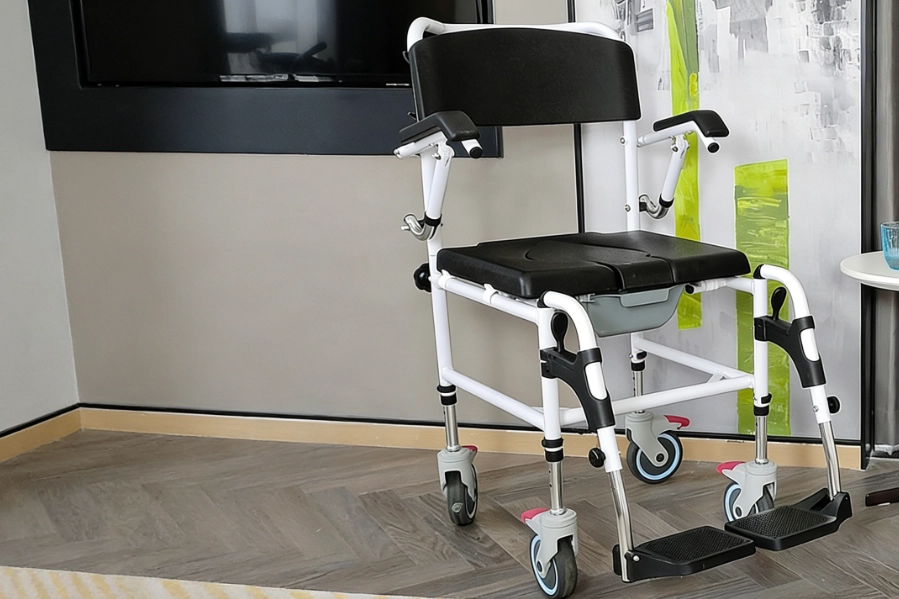
Basic powder finishes may peel off, leaving metal open to dampness. Anodized aluminum or durable coating methods work well for items like the Bathroom Commode Toilet Chair Portable Folding Commode Wheelchair, which face water and cleaners often. These treatments preserve structure over extended periods. They also simplify upkeep in humid settings.
Bathroom slips cause a large share of elderly harm cases. The bond between chair and surface decides if safety holds or fails. A robust frame offers little value if the chair glides on slick tiles.
Rubber bases vary in performance. Carbon-rich rubber ends create a grip like suction on damp floors. These should span a broad area to handle weight and endure wear from rough surfaces over months. This design maintains secure footing in challenging conditions.
The seating area requires grip texture. Plain plastic turns hazardous with soap residue. Built-in ridges or water outlets direct moisture from contact zones, holding users firmly in place. Such elements promote confidence during routines.
Firmness arises from a broad foundation. Supports that angle outward slightly expand the base, reducing tip risks. Uneven contact points can lead to shakes, prompting users to overcorrect and fall. Proper alignment ensures steady operation throughout use.
Wheeled commode chairs make the stop system the core mechanical element. Uncontrolled motion during transfers poses serious risks in care facilities.
Wheels must turn smoothly for transport but secure fully when parked. Top casters fix both spin and pivot actions. This setup forms a stable base that resists subtle shifts under pressure. It supports safe interactions in busy environments.
Attendants frequently manage multiple tasks. Hand-based stops prove awkward and get overlooked. Robust foot controls enable fast activation. This minor aspect greatly raises usage rates in medical contexts.
Stops need to resist on minor slopes or strong side pulls. Basic plastic catches often break or give way. Steel-backed locks represent the norm for dependable hold. They ensure consistent performance across situations.
Rigid plastic tires slide on smooth surfaces. Polyurethane or tailored rubber compounds offer superior traction. These options also cushion impacts, improving comfort during transfers. As a result, handling becomes smoother for all involved.
Flexibility draws buyers to products like the Raised Toilet Seat with Handles Adjustable 3 in 1 Commode Chair. Yet, each tweak spot turns into a risk if the secure system lacks strength.
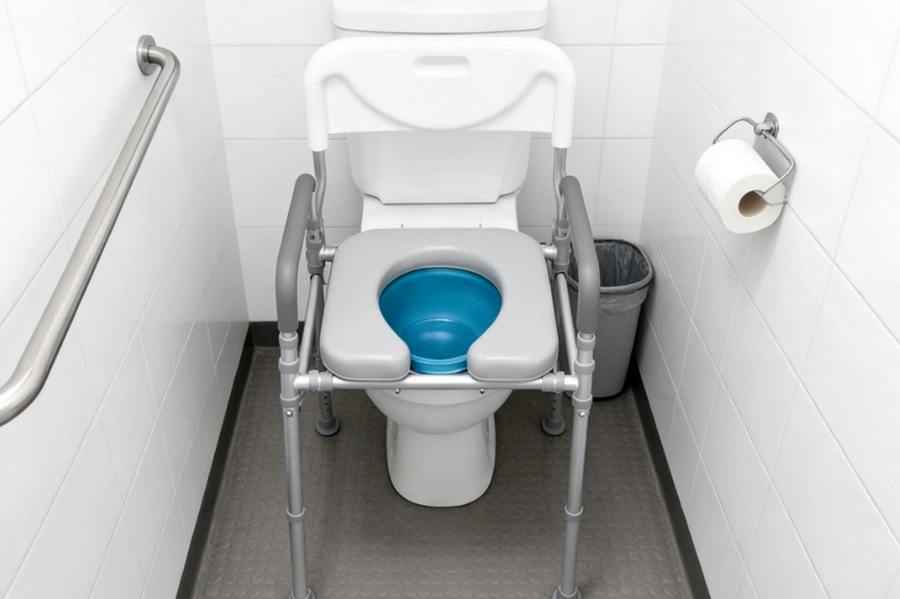
Many models rely on spring pins for height changes. These must engage exactly in slots. Oversized openings allow shakes in legs, while short pins risk dislodging under load. Precise fits guarantee smooth and secure adjustments over time.
Armrests bear heavy pushing for rising. They endure substantial strain. Fixed or movable types demand tight holds. Weak connections can trigger falls at key moments. Strong mechanisms provide reliable aid during movements.
Distributors value no-tool setups for efficiency. Still, twist fasteners or manual screws must resist loosening from vibrations. Routine reviews help, but initial build quality ensures lasting tightness. This approach supports hassle-free maintenance.
Effective layout concerns function over appearance. Physics governs the process. Weight balance shifts with sitting, rising, or tilting. The structure must adjust for these variations.
Proper seat size keeps user mass over the supports. Shallow designs risk backward tips from reclining, while broad ones hinder arm access. Balanced dimensions foster secure positioning. They align with natural body movements effectively.
Rigid flat seats discomfort users and prompt shifting. Such actions create unsteadiness. Shaped surfaces spread load on thighs and rear, easing hotspots. This keeps individuals composed and protected during sessions.
Certain models position back legs beyond the seat edge. This adjustment prevents rear flips despite strong leans. It appears in many clinical-grade pieces. The feature adds an extra layer of assurance in dynamic uses.
Care routines often involve sideways entries. The side strength of the build must counter these forces without leaning. Quality joins and thick pipes demonstrate value here. They maintain upright posture reliably.
Q1: How does frame material affect the long-term cost for distributors?
A: While aluminum is more expensive upfront than steel, its corrosion resistance means fewer returns and replacements, leading to higher customer satisfaction and lower long-term costs.
Q2: Can these chairs be used in a regular shower?
A: Yes, as long as the materials are rust-resistant and the feet have anti-slip rubber tips. Models with drainage holes in the seat are specifically designed for dual-use as shower chairs.
Q3: What is the benefit of a 3-in-1 design for medical facilities?
A: A 3-in-1 chair functions as a standalone commode, a raised toilet seat, and a toilet safety frame. This versatility reduces the amount of inventory a facility needs to store while meeting various patient needs.
Q4: How often should the locking mechanisms be inspected?
A: In a professional setting, safety checks should occur monthly. Ensure that the spring pins on adjustable legs click fully into place and that caster brakes hold firmly without slipping.
Q5: Do folding models sacrifice safety for portability?
A: Not if they are engineered correctly. High-quality folding chairs use locking hinges and reinforced joints that are just as stable as fixed frames when fully deployed.
Picking solid medical gear forms the base of any effective distribution operation. Patient protection serves as the key measure of excellence, particularly for mobility supports in risky spots such as bathrooms. For firms looking for a steady production ally, Beiqin emerges as a top choice with 16 years of solid knowledge in rehabilitation. They run a 20,000-square-meter site equipped with more than 60 pieces of specialized machinery. As a tech-focused business, it supplies customized OEM and ODM solutions to over 50 nations. Their focus on “Technology for Dignity” shows through a daily output of 6,000 pieces and a stockpile of 180,000 items ready for dispatch. This setup lets worldwide clients access technical support and quality aid devices promptly.
Frame strength acts as the initial barrier to device breakdowns. A commode chair needs to bear heavy loads without bending or giving way, especially during sudden seating. While distributors may prioritize cost, the thickness of the metal and weld strength shape the item’s durability and protection level.
Aluminum alloys gain favor due to their light weight and built-in protection against rust. In damp bathroom conditions, basic steel structures tend to degrade internally, creating hidden weak points. Opting for strong aluminum keeps the chair simple to shift while upholding solid load support. This choice enhances overall reliability in daily applications.
A basic single-tube structure seldom suffices for tough tasks. Cross-braces spread the load across all four supports evenly. As a result, the frame avoids spreading apart gradually. Many solid builds include paired cross-pieces to manage side pressures during user shifts. Such features boost stability in varied scenarios.
Fixed weight limits reveal only part of the picture. Actual scenarios involve motion. Dependable producers conduct impact simulations and strain evaluations to replicate forceful sitting. This information proves vital for aligning with CE and ISO guidelines. Consequently, products gain trust in regulated markets.
Basic powder finishes may peel off, leaving metal open to dampness. Anodized aluminum or durable coating methods work well for items like the Bathroom Commode Toilet Chair Portable Folding Commode Wheelchair, which face water and cleaners often. These treatments preserve structure over extended periods. They also simplify upkeep in humid settings.
Bathroom slips cause a large share of elderly harm cases. The bond between chair and surface decides if safety holds or fails. A robust frame offers little value if the chair glides on slick tiles.
Rubber bases vary in performance. Carbon-rich rubber ends create a grip like suction on damp floors. These should span a broad area to handle weight and endure wear from rough surfaces over months. This design maintains secure footing in challenging conditions.
The seating area requires grip texture. Plain plastic turns hazardous with soap residue. Built-in ridges or water outlets direct moisture from contact zones, holding users firmly in place. Such elements promote confidence during routines.
Firmness arises from a broad foundation. Supports that angle outward slightly expand the base, reducing tip risks. Uneven contact points can lead to shakes, prompting users to overcorrect and fall. Proper alignment ensures steady operation throughout use.
Wheeled commode chairs make the stop system the core mechanical element. Uncontrolled motion during transfers poses serious risks in care facilities.
Wheels must turn smoothly for transport but secure fully when parked. Top casters fix both spin and pivot actions. This setup forms a stable base that resists subtle shifts under pressure. It supports safe interactions in busy environments.
Attendants frequently manage multiple tasks. Hand-based stops prove awkward and get overlooked. Robust foot controls enable fast activation. This minor aspect greatly raises usage rates in medical contexts.
Stops need to resist on minor slopes or strong side pulls. Basic plastic catches often break or give way. Steel-backed locks represent the norm for dependable hold. They ensure consistent performance across situations.
Rigid plastic tires slide on smooth surfaces. Polyurethane or tailored rubber compounds offer superior traction. These options also cushion impacts, improving comfort during transfers. As a result, handling becomes smoother for all involved.
Flexibility draws buyers to products like the Raised Toilet Seat with Handles Adjustable 3 in 1 Commode Chair. Yet, each tweak spot turns into a risk if the secure system lacks strength.
Many models rely on spring pins for height changes. These must engage exactly in slots. Oversized openings allow shakes in legs, while short pins risk dislodging under load. Precise fits guarantee smooth and secure adjustments over time.
Armrests bear heavy pushing for rising. They endure substantial strain. Fixed or movable types demand tight holds. Weak connections can trigger falls at key moments. Strong mechanisms provide reliable aid during movements.
Distributors value no-tool setups for efficiency. Still, twist fasteners or manual screws must resist loosening from vibrations. Routine reviews help, but initial build quality ensures lasting tightness. This approach supports hassle-free maintenance.
Effective layout concerns function over appearance. Physics governs the process. Weight balance shifts with sitting, rising, or tilting. The structure must adjust for these variations.
Proper seat size keeps user mass over the supports. Shallow designs risk backward tips from reclining, while broad ones hinder arm access. Balanced dimensions foster secure positioning. They align with natural body movements effectively.
Rigid flat seats discomfort users and prompt shifting. Such actions create unsteadiness. Shaped surfaces spread load on thighs and rear, easing hotspots. This keeps individuals composed and protected during sessions.
Certain models position back legs beyond the seat edge. This adjustment prevents rear flips despite strong leans. It appears in many clinical-grade pieces. The feature adds an extra layer of assurance in dynamic uses.
Care routines often involve sideways entries. The side strength of the build must counter these forces without leaning. Quality joins and thick pipes demonstrate value here. They maintain upright posture reliably.
Q1: How does frame material affect the long-term cost for distributors?
A: While aluminum is more expensive upfront than steel, its corrosion resistance means fewer returns and replacements, leading to higher customer satisfaction and lower long-term costs.
Q2: Can these chairs be used in a regular shower?
A: Yes, as long as the materials are rust-resistant and the feet have anti-slip rubber tips. Models with drainage holes in the seat are specifically designed for dual-use as shower chairs.
Q3: What is the benefit of a 3-in-1 design for medical facilities?
A: A 3-in-1 chair functions as a standalone commode, a raised toilet seat, and a toilet safety frame. This versatility reduces the amount of inventory a facility needs to store while meeting various patient needs.
Q4: How often should the locking mechanisms be inspected?
A: In a professional setting, safety checks should occur monthly. Ensure that the spring pins on adjustable legs click fully into place and that caster brakes hold firmly without slipping.
Q5: Do folding models sacrifice safety for portability?
A: Not if they are engineered correctly. High-quality folding chairs use locking hinges and reinforced joints that are just as stable as fixed frames when fully deployed.