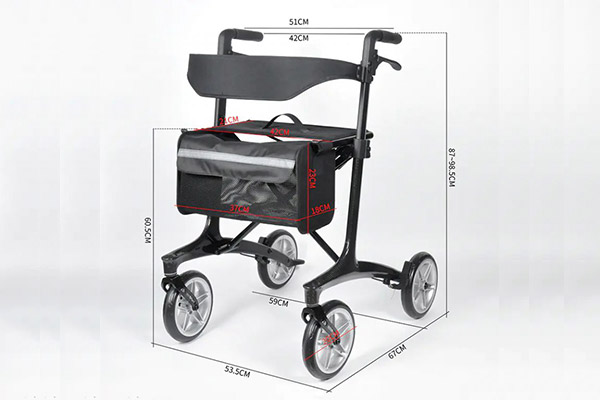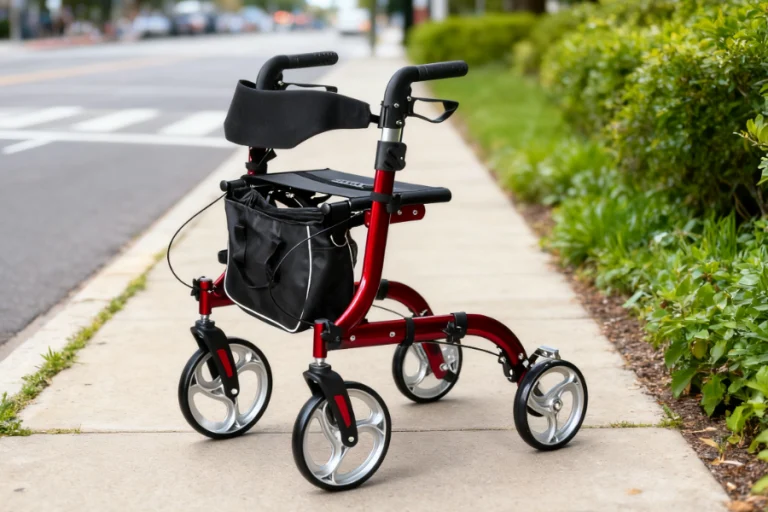
A rollator is not just a walking aid for Nursing Homes, Clinics and Home Care Suppliers. It is used for their daily care, for transferring patients, for short distance mobility and for rest breaks. A rollator is also used for storage and for outdoor activities. In order to meet the needs of older users a rollator must be stable and safe. For the caregivers a rollator must be user friendly and for the bulk buyer it must be of consistent high quality. Small details on a rollator can create big problems. A too tight brake, a wobbly seat or a poor folding mechanism of the frame can create complaints and returns and can even lead to extra service costs.

When purchasing products for the care market most customers will look at the safety of the product, the ease of use of the product and the long term supply of the product. Price is also a factor but when purchasing products for use by seniors, rehabilitation users and people with disabilities on a daily basis, low price is not enough. We judge products for professional supply such as this by the strength of the frame, the brakes, the seat, the wheels, how the product folds and the after sales service and support given.
A rollator helps users reduce pressure on the legs and improve walking stability. In nursing homes and clinics, users may include seniors with weak leg strength, post-surgery patients, and people with poor balance. This is why the frame must feel steady, not loose or noisy after repeated use.
The aluminum frame rollator walker with seat and 8 wheels is a practical example for B2B buyers. It uses an aluminum frame, PVC armrest, Textilene seat, linear pull brake, and supports up to 136 kg. These are not fancy selling points. They are basic details buyers check before placing repeat orders.
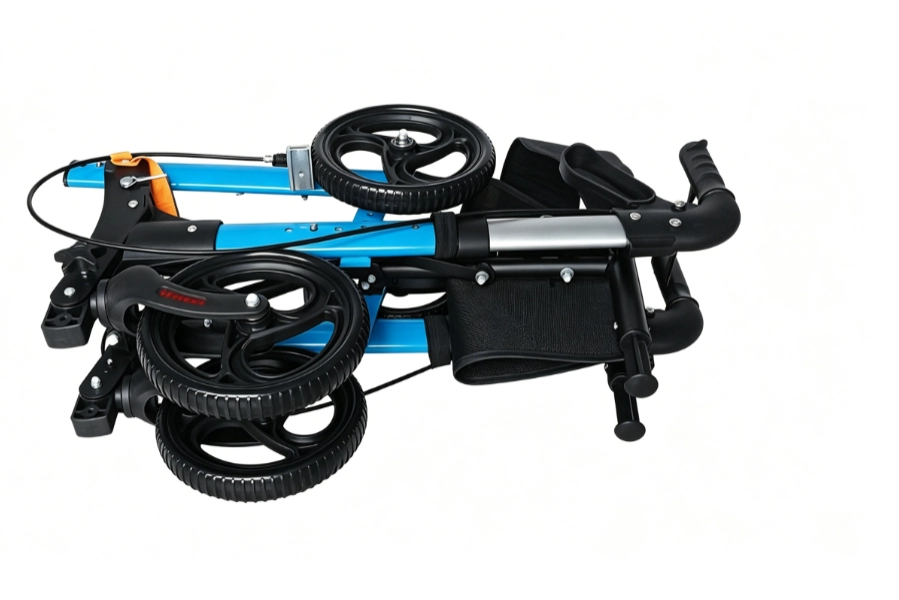
A rollator with a seat has a clear advantage for elderly care. Users can stop and rest when walking becomes tiring. For care staff, that means fewer sudden support requests in corridors, gardens, waiting areas, and home care visits.
A padded backrest also matters. It gives users a safer and more relaxed short rest compared with a flat frame design. In product selection, the seat material should be easy to clean, firm, and not too slippery. Textilene is often used because it is light, breathable, and suitable for daily mobility aids. It is not a luxury detail, but it feels much better in real use.
Shared care use is different from single-user home use. In a facility, one rollator may be handled by several residents, nurses, family members, or visiting therapists. Simple operation becomes more important than complex functions. The best product is usually the one that staff can explain in ten seconds.
A rollator brake should be easy to hold, easy to lock, and easy to release. Linear pull brakes are widely used because the operation is familiar and direct. For older users, clear brake feedback is important. A vague brake can make users nervous, while a stiff brake may be hard for weak hands.
For nursing homes and clinics, parking brake function is also important when the user sits down. Staff need to know that the rear wheels can stay fixed during rest. This small function reduces risk and makes the product easier to accept by caregivers.
Many product complaints come from parts that look fine at first but feel weak after several weeks. For rollators, the seat, backrest, frame joints, and folding parts should be checked carefully. A 136 kg weight capacity gives buyers a useful reference for elderly care and rehabilitation use.
The frame material also affects trust. Aluminum is popular because it is lighter than many steel structures and still strong enough for daily use. For home care suppliers, lighter weight also helps delivery, display, and end-user handling. Less strain, fewer complaints. That is a very real sales point.
Bulk rollator buyers do not only buy one model. They often need a stable supply plan, matched packaging, reliable product size, and flexible options for different markets. Materials and weight affect shipping cost, warehouse space, retail display, and user experience. These details are easy to overlook during early quotation talks, but they show up later in business results.
Aluminum rollators are useful for nursing homes, clinics, and home care suppliers because the product can be moved, folded, cleaned, and stored more easily. For staff who handle many aids in one day, a few kilograms difference matters.
Beiqin has 16 years of experience in age-adaptive assistive devices and works with lightweight designs such as aluminum and carbon fiber structures. The company operates a 20,000㎡ digital manufacturing base, with more than 60 professional devices for production. For B2B clients, this background matters because rollator quality depends on steady welding, frame accuracy, and repeatable assembly, not only on brochure photos.
Foldability is a practical B2B feature. Clinics need storage space. Home care suppliers need easier delivery. Retailers need compact display. Nursing homes often need several units ready but cannot let equipment block corridors.
A rollator that folds smoothly helps reduce handling problems. Buyers should check whether the folded size fits common storage racks and carton planning. For a distributor, this may affect how many pieces can be loaded per shipment. It is a boring detail, but logistics teams usually care about it more than anyone else.
Rollator complaints often come from simple things: handle height, brake tension, seat comfort, wheel movement, bag size, or unstable standing. A product that looks acceptable on paper may still perform poorly in daily care. Good selection means checking the points that staff and users touch most often.
Height adjustment is important because users are not the same size. A handle that is too low can make users bend forward. A handle that is too high can make the arms tired. Both problems may reduce walking confidence.
For professional buyers, adjustable handle height gives one SKU more flexibility across different user groups. It also helps reduce inventory pressure. Instead of ordering too many size-specific products, suppliers can keep models that cover a wider range of users.
Wheel size affects movement. In many rollator models, 8-inch wheels are common because they balance indoor mobility and outdoor use. Larger wheels may roll better on uneven surfaces, while smaller wheels may suit tight indoor spaces. The right choice depends on where the product will be sold.
A removable storage bag is another useful detail. Users often need to carry small items, medical documents, water bottles, or personal goods. For facilities, bags should be easy to remove and clean. Simple parts are better. Over-designed accessories can break faster and create more service work.
Mobility support does not stop at walking. Many care accidents happen around bathrooms because floors are wet, space is limited, and users may feel tired after standing. For suppliers serving nursing homes, clinics, and home care channels, rollators and bathroom safety aids often belong in the same purchasing plan.
A rollator supports movement before and after bathing, while a shower chair supports seated washing. This combination is useful for elderly care, post-surgery recovery, and disabled users. Buyers can build a more complete product line by matching walking aids, shower chairs, commode chairs, toilet risers, and safety rails.
Beiqin offers full-scenario elderly care products, covering mobility aids, daily living aids, and rehabilitation products. The solution range is useful for clients who want one supplier for mobility, bathroom safety, and home care support instead of placing small orders across too many vendors.
For bathroom safety product planning, the Portable Height Adjustable Tool Free Shower Chair with for Elderly and Disabled fits well with rollator supply. It is designed for elderly and disabled users, with a portable structure, tool-free manual assembly, suction cup support for flat surfaces, drainage holes to reduce water buildup, a shower head holder, and adjustable height for different users.
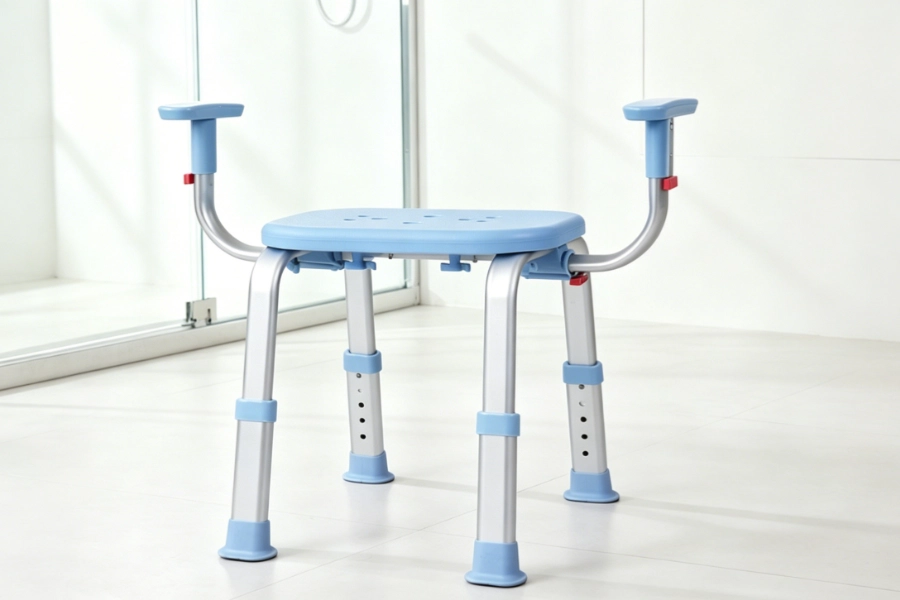
This kind of product is easy to explain to care buyers. It does not need complicated installation. In home care sales, that is a strong advantage. In facility supply, fast setup also saves staff time. The product line feels more complete when a rollator order can be paired with bathroom safety items in the same inquiry.
A rollator supplier for B2B buyers should not only provide products. Partners usually need stable capacity, clear certification support, sample speed, stock backup, OEM/ODM service, and after-sales communication. When a buyer is preparing a tender, building a care product line, or testing a new private label project, factory response speed can decide whether the project moves forward.
Beiqin has more than 16 years of experience in age-adaptive assistive device manufacturing. Its product scope covers rollators, walkers, wheelchairs, mobility scooters, shower chairs, commode chairs, safety rails, toilet risers, canes, crutches, and rehabilitation equipment.
The company has more than 210 employees, a 20,000㎡ factory area, 4 advanced production lines, over 60 professional devices, and daily production capacity of more than 6,000 pieces. Its annual production capacity reaches 2.3 million units, with 180,000 units in ready stock. These numbers are helpful for distributors and medical supply clients who need stable reorder ability, not just a first sample.
Beiqin supports 3-day sampling and 7-day delivery for 10,000-unit orders. Ready stock can be shipped within 12 hours in suitable cases, which is useful for urgent replenishment. For compliance, the company holds certifications such as FDA, CE, RoHS, MDR, UKCA, ISO 13485, ISO 9001, BSCI, ISO 14001, and ISO 45001.
For partners planning private label projects, OEM/ODM service can cover product adjustment, packaging, color, function selection, and model planning. For later cooperation, service support is also important because care products need clear communication after shipment. A good rollator project rarely ends at delivery. It usually continues with feedback, spare parts, repeat orders, and small changes from the market.
Q1: What Rollator Feature Should Nursing Homes Check First?
A: Nursing homes should first check frame stability, brake control, seat strength, and weight capacity. A rollator used in shared care should be simple to operate and strong enough for repeated daily use.
Q2: Is an Aluminum Rollator Better for Home Care Suppliers?
A: An aluminum rollator is often a better choice for home care suppliers because it is lighter, easier to move, and more convenient for delivery and storage. It also helps older users handle the product with less effort.
Q3: Why Is a Seat Important on a Rollator?
A: A seat allows users to rest during walking. This is helpful for seniors, rehabilitation users, and people with lower stamina. A padded backrest adds more support during short breaks.
Q4: Should Rollator Buyers Also Source Shower Chairs?
A: Yes. Rollators support walking, while shower chairs support safer bathing. Suppliers serving nursing homes, clinics, and home care channels can build a stronger product line by offering both mobility aids and bathroom safety aids.
Q5: Does Beiqin Support OEM and Bulk Rollator Orders?
A: Yes. Beiqin supports OEM/ODM cooperation, fast sampling, bulk production, ready stock, and global delivery support. Its 16 years of assistive device manufacturing experience helps partners handle wholesale, private label, and care product line projects.
A rollator is not just a walking aid for Nursing Homes, Clinics and Home Care Suppliers. It is used for their daily care, for transferring patients, for short distance mobility and for rest breaks. A rollator is also used for storage and for outdoor activities. In order to meet the needs of older users a rollator must be stable and safe. For the caregivers a rollator must be user friendly and for the bulk buyer it must be of consistent high quality. Small details on a rollator can create big problems. A too tight brake, a wobbly seat or a poor folding mechanism of the frame can create complaints and returns and can even lead to extra service costs.
When purchasing products for the care market most customers will look at the safety of the product, the ease of use of the product and the long term supply of the product. Price is also a factor but when purchasing products for use by seniors, rehabilitation users and people with disabilities on a daily basis, low price is not enough. We judge products for professional supply such as this by the strength of the frame, the brakes, the seat, the wheels, how the product folds and the after sales service and support given.
A rollator helps users reduce pressure on the legs and improve walking stability. In nursing homes and clinics, users may include seniors with weak leg strength, post-surgery patients, and people with poor balance. This is why the frame must feel steady, not loose or noisy after repeated use.
The aluminum frame rollator walker with seat and 8 wheels is a practical example for B2B buyers. It uses an aluminum frame, PVC armrest, Textilene seat, linear pull brake, and supports up to 136 kg. These are not fancy selling points. They are basic details buyers check before placing repeat orders.
A rollator with a seat has a clear advantage for elderly care. Users can stop and rest when walking becomes tiring. For care staff, that means fewer sudden support requests in corridors, gardens, waiting areas, and home care visits.
A padded backrest also matters. It gives users a safer and more relaxed short rest compared with a flat frame design. In product selection, the seat material should be easy to clean, firm, and not too slippery. Textilene is often used because it is light, breathable, and suitable for daily mobility aids. It is not a luxury detail, but it feels much better in real use.
Shared care use is different from single-user home use. In a facility, one rollator may be handled by several residents, nurses, family members, or visiting therapists. Simple operation becomes more important than complex functions. The best product is usually the one that staff can explain in ten seconds.
A rollator brake should be easy to hold, easy to lock, and easy to release. Linear pull brakes are widely used because the operation is familiar and direct. For older users, clear brake feedback is important. A vague brake can make users nervous, while a stiff brake may be hard for weak hands.
For nursing homes and clinics, parking brake function is also important when the user sits down. Staff need to know that the rear wheels can stay fixed during rest. This small function reduces risk and makes the product easier to accept by caregivers.
Many product complaints come from parts that look fine at first but feel weak after several weeks. For rollators, the seat, backrest, frame joints, and folding parts should be checked carefully. A 136 kg weight capacity gives buyers a useful reference for elderly care and rehabilitation use.
The frame material also affects trust. Aluminum is popular because it is lighter than many steel structures and still strong enough for daily use. For home care suppliers, lighter weight also helps delivery, display, and end-user handling. Less strain, fewer complaints. That is a very real sales point.
Bulk rollator buyers do not only buy one model. They often need a stable supply plan, matched packaging, reliable product size, and flexible options for different markets. Materials and weight affect shipping cost, warehouse space, retail display, and user experience. These details are easy to overlook during early quotation talks, but they show up later in business results.
Aluminum rollators are useful for nursing homes, clinics, and home care suppliers because the product can be moved, folded, cleaned, and stored more easily. For staff who handle many aids in one day, a few kilograms difference matters.
Beiqin has 16 years of experience in age-adaptive assistive devices and works with lightweight designs such as aluminum and carbon fiber structures. The company operates a 20,000㎡ digital manufacturing base, with more than 60 professional devices for production. For B2B clients, this background matters because rollator quality depends on steady welding, frame accuracy, and repeatable assembly, not only on brochure photos.
Foldability is a practical B2B feature. Clinics need storage space. Home care suppliers need easier delivery. Retailers need compact display. Nursing homes often need several units ready but cannot let equipment block corridors.
A rollator that folds smoothly helps reduce handling problems. Buyers should check whether the folded size fits common storage racks and carton planning. For a distributor, this may affect how many pieces can be loaded per shipment. It is a boring detail, but logistics teams usually care about it more than anyone else.
Rollator complaints often come from simple things: handle height, brake tension, seat comfort, wheel movement, bag size, or unstable standing. A product that looks acceptable on paper may still perform poorly in daily care. Good selection means checking the points that staff and users touch most often.
Height adjustment is important because users are not the same size. A handle that is too low can make users bend forward. A handle that is too high can make the arms tired. Both problems may reduce walking confidence.
For professional buyers, adjustable handle height gives one SKU more flexibility across different user groups. It also helps reduce inventory pressure. Instead of ordering too many size-specific products, suppliers can keep models that cover a wider range of users.
Wheel size affects movement. In many rollator models, 8-inch wheels are common because they balance indoor mobility and outdoor use. Larger wheels may roll better on uneven surfaces, while smaller wheels may suit tight indoor spaces. The right choice depends on where the product will be sold.
A removable storage bag is another useful detail. Users often need to carry small items, medical documents, water bottles, or personal goods. For facilities, bags should be easy to remove and clean. Simple parts are better. Over-designed accessories can break faster and create more service work.
Mobility support does not stop at walking. Many care accidents happen around bathrooms because floors are wet, space is limited, and users may feel tired after standing. For suppliers serving nursing homes, clinics, and home care channels, rollators and bathroom safety aids often belong in the same purchasing plan.
A rollator supports movement before and after bathing, while a shower chair supports seated washing. This combination is useful for elderly care, post-surgery recovery, and disabled users. Buyers can build a more complete product line by matching walking aids, shower chairs, commode chairs, toilet risers, and safety rails.
Beiqin offers full-scenario elderly care products, covering mobility aids, daily living aids, and rehabilitation products. The solution range is useful for clients who want one supplier for mobility, bathroom safety, and home care support instead of placing small orders across too many vendors.
For bathroom safety product planning, the Portable Height Adjustable Tool Free Shower Chair with for Elderly and Disabled fits well with rollator supply. It is designed for elderly and disabled users, with a portable structure, tool-free manual assembly, suction cup support for flat surfaces, drainage holes to reduce water buildup, a shower head holder, and adjustable height for different users.
This kind of product is easy to explain to care buyers. It does not need complicated installation. In home care sales, that is a strong advantage. In facility supply, fast setup also saves staff time. The product line feels more complete when a rollator order can be paired with bathroom safety items in the same inquiry.
A rollator supplier for B2B buyers should not only provide products. Partners usually need stable capacity, clear certification support, sample speed, stock backup, OEM/ODM service, and after-sales communication. When a buyer is preparing a tender, building a care product line, or testing a new private label project, factory response speed can decide whether the project moves forward.
Beiqin has more than 16 years of experience in age-adaptive assistive device manufacturing. Its product scope covers rollators, walkers, wheelchairs, mobility scooters, shower chairs, commode chairs, safety rails, toilet risers, canes, crutches, and rehabilitation equipment.
The company has more than 210 employees, a 20,000㎡ factory area, 4 advanced production lines, over 60 professional devices, and daily production capacity of more than 6,000 pieces. Its annual production capacity reaches 2.3 million units, with 180,000 units in ready stock. These numbers are helpful for distributors and medical supply clients who need stable reorder ability, not just a first sample.
Beiqin supports 3-day sampling and 7-day delivery for 10,000-unit orders. Ready stock can be shipped within 12 hours in suitable cases, which is useful for urgent replenishment. For compliance, the company holds certifications such as FDA, CE, RoHS, MDR, UKCA, ISO 13485, ISO 9001, BSCI, ISO 14001, and ISO 45001.
For partners planning private label projects, OEM/ODM service can cover product adjustment, packaging, color, function selection, and model planning. For later cooperation, service support is also important because care products need clear communication after shipment. A good rollator project rarely ends at delivery. It usually continues with feedback, spare parts, repeat orders, and small changes from the market.
Q1: What Rollator Feature Should Nursing Homes Check First?
A: Nursing homes should first check frame stability, brake control, seat strength, and weight capacity. A rollator used in shared care should be simple to operate and strong enough for repeated daily use.
Q2: Is an Aluminum Rollator Better for Home Care Suppliers?
A: An aluminum rollator is often a better choice for home care suppliers because it is lighter, easier to move, and more convenient for delivery and storage. It also helps older users handle the product with less effort.
Q3: Why Is a Seat Important on a Rollator?
A: A seat allows users to rest during walking. This is helpful for seniors, rehabilitation users, and people with lower stamina. A padded backrest adds more support during short breaks.
Q4: Should Rollator Buyers Also Source Shower Chairs?
A: Yes. Rollators support walking, while shower chairs support safer bathing. Suppliers serving nursing homes, clinics, and home care channels can build a stronger product line by offering both mobility aids and bathroom safety aids.
Q5: Does Beiqin Support OEM and Bulk Rollator Orders?
A: Yes. Beiqin supports OEM/ODM cooperation, fast sampling, bulk production, ready stock, and global delivery support. Its 16 years of assistive device manufacturing experience helps partners handle wholesale, private label, and care product line projects.