The procurement of mobility aids involves more than comparing unit prices and shipping lead times. For professional importers and healthcare distributors, the primary objective is to secure products that meet stringent safety regulations and clinical performance standards. The global medical device sector demands partners with solid technical knowledge and a record of meeting regulations, and Beiqin is an ISO 13485-certified manufacturer with 16 years in senior mobility aids, has supplied 200+ distributors globally—compliant with FDA 21 CFR and EU MDR. By combining advanced manufacturing solutions with a strong OEM/ODM framework, this company delivers the quality guarantees essential for demanding healthcare areas, since their focus on worldwide certifications confirms that each walker supplied aligns with the tough needs of medical settings.

Although ISO 9001 offers a basic structure for quality control in many fields, it misses the targeted measures needed for medical items, whereas ISO 13485 targets the safety and performance of goods meant for patient care. Importers who emphasize this certification make sure their supply networks follow detailed procedures that cover all phases of the product life.
Adopting ISO 13485 means a producer must keep a full quality guide that puts medical safety ahead of everyday business speed, which includes particular steps for clean work areas and avoiding dirt in materials. These systems help maintain high standards throughout production, so devices remain safe for users.
Under this standard, handling risks means spotting possible weak spots in walker balance or joint strength before items hit the shelves, and thorough checks lower the chance of recalls while protecting final users. Such approaches build confidence in the overall process.
Tracking forms a main part of medical production, as ISO 13485 demands that each part, from aluminum tubes to plastic handles, links back to its original supply and exact batch made. This detail supports quick issue resolution if problems arise.
Many country health offices view ISO 13485 as the base for getting approvals, which smooths matching local rules and helps sellers enter fresh areas with less effort. Compliance opens doors to broader trade opportunities.
When a multifunctional walker malfunctions during use, the seller and merchant are subject to significant legal and financial risks. Choosing a certified manufacturer shifts the focus from post-incident problem resolution to preventive maintenance, as their documented quality procedures clearly demonstrate rigorous workflows and compliance with global safety standards.
Approved production methods act as a main shield against charges of poor care, because sticking to known standards shows the item was built and made to top industry safety levels. This proof strengthens positions in any legal matters.
An approved factory runs steady pressure tests to confirm metal builds endure ongoing use without bending, including checks on how much weight an Aluminum Walker holds to match stated limits every time. These tests ensure long-term reliability for users.

Ongoing reviews confirm each piece from the line has equal build strength, which matters greatly for guarding at-risk groups who depend on these tools for steady daily support.
World trade in medical gear faces tight oversight from bodies like the FDA in the US and EU authorities, yet items with ISO 13485 backing include the tech papers needed to clear borders fast, which cuts paperwork loads on buyers and speeds up launch times.
Border officials will prioritize plant shipments that have received valid medical clearance, so having the relevant documents ready can avoid costly storage costs and inspections due to non-compliance.
In seeking local device permits, an ISO 13485 paper cuts down extra tests needed, since most officials take it as evidence of a solid quality setup. This eases entry into markets.
EU areas call for full Technical Files per the Medical Device Regulation (MDR), and an approved producer keeps these organized so safety and function info sits ready for reviews.
For a B2B partner, the quality of the imported product is a direct reflection of their own brand. Offering certified mobility aids builds long-term trust with hospitals, pharmacies, and elderly care facilities. Reliability in product performance leads to higher customer retention and fewer returns, which stabilizes profit margins over time.
In a busy field, approval acts as a strong way to stand out, since buyers prefer sellers who show goods match worldwide health rules over those with unapproved choices. This edge drives sales growth.
Products manufactured in strict compliance with quality standards exhibit lower equipment failure rates, thereby reducing warranty, maintenance, and technical support costs. The cumulative savings over time will be more pronounced.
Exact production makes sure body-fit traits like handle ease and wheel setup work as planned, which betters user daily life and lifts the provider’s standing.
Medical centers and clinics need gear that works without issues, and approved walkers for the elderly deliver the steadiness required in pro health spots where user safety tops all.
Forming a strong product lineup calls for mixing basic aid tools with targeted mobility fixes, as buyers pick types that fit varied movement needs while keeping all at the same high approved quality level.
Basic types provides core support for postoperative recovery or routine age-related decline in motor function, focusing on simple operations and stable physical training, and is suitable for common rehabilitation pathways.

For users requiring regular rests, the Lightweight Walker with built-in seats offers distinct advantages, seamlessly combining aluminum portability with convenient rest functionality, making it ideal for extended use.
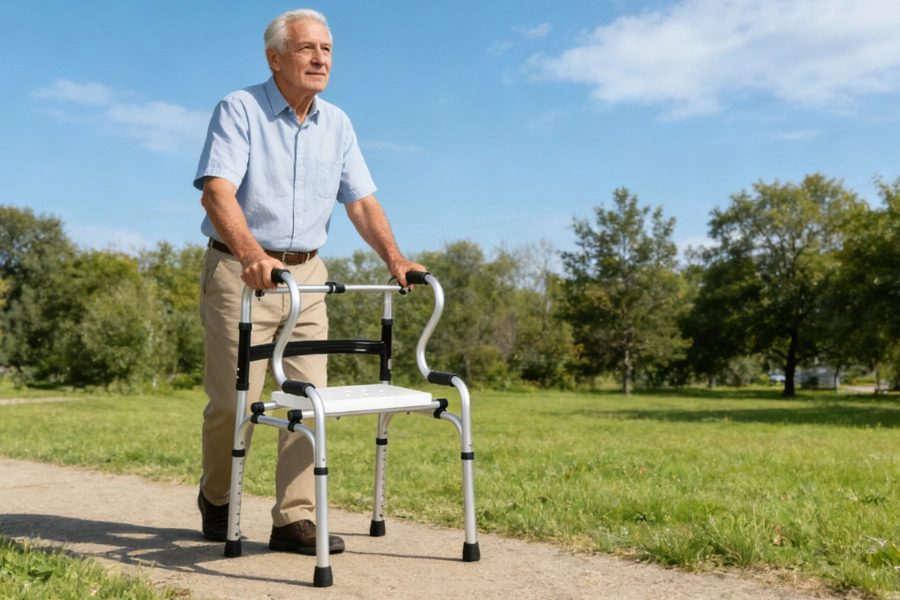
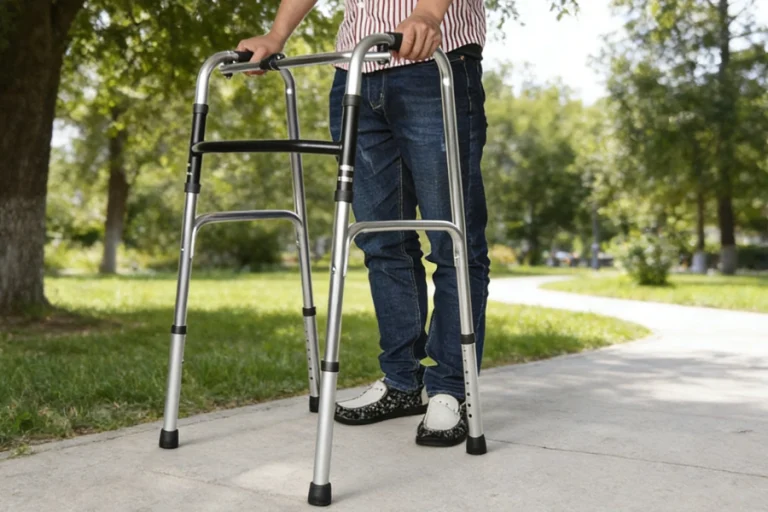
Current fold systems let the medical walker close simply for moving or keeping, which helps especially those with weak grips since it takes little effort to work.
Offering broad height changes means one type fits many body sizes, cutting the count of different stock items a seller must hold. This flexibility helps to optimize inventory management.
Collaborating with a partner boasting 16 years of R&D expertise ensures superior product development and supply chain stability. By integrating international standards with innovative mobility solutions, Beiqin delivers durable, user-focused assistive devices. Their comprehensive OEM/ODM services allow for extensive customization—including branding and structural modifications—while strictly maintaining ISO 13485 compliance. Furthermore, end-to-end transparency and a proven track record in FDA, CE, and BSCI certifications facilitate seamless entry into global markets. This robust compliance framework protects importer interests, ensuring long-term business viability through professional support and uncompromised quality standards in high-stakes healthcare environments.
Q1: Can an ISO 13485 certified factory also provide OEM services?
A: Professional manufacturers often combine certification with OEM services, allowing clients to put their own branding on products that are guaranteed to meet medical-grade quality standards.
Q2: Is ISO 13485 mandatory for selling walkers in the EU?
A: While the MDR is the primary regulation, ISO 13485 is the harmonized standard used to demonstrate that the manufacturer has a quality system capable of meeting MDR requirements.
Q3: What is the weight capacity of a certified aluminum walker?
A: Most professional-grade aluminum walkers are tested and certified to support a maximum weight of 136 kilograms (300 pounds), ensuring safety for a wide range of users.
The procurement of mobility aids involves more than comparing unit prices and shipping lead times. For professional importers and healthcare distributors, the primary objective is to secure products that meet stringent safety regulations and clinical performance standards. The global medical device sector demands partners with solid technical knowledge and a record of meeting regulations, and Beiqin is an ISO 13485-certified manufacturer with 16 years in senior mobility aids, has supplied 200+ distributors globally—compliant with FDA 21 CFR and EU MDR. By combining advanced manufacturing solutions with a strong OEM/ODM framework, this company delivers the quality guarantees essential for demanding healthcare areas, since their focus on worldwide certifications confirms that each walker supplied aligns with the tough needs of medical settings.
Although ISO 9001 offers a basic structure for quality control in many fields, it misses the targeted measures needed for medical items, whereas ISO 13485 targets the safety and performance of goods meant for patient care. Importers who emphasize this certification make sure their supply networks follow detailed procedures that cover all phases of the product life.
Adopting ISO 13485 means a producer must keep a full quality guide that puts medical safety ahead of everyday business speed, which includes particular steps for clean work areas and avoiding dirt in materials. These systems help maintain high standards throughout production, so devices remain safe for users.
Under this standard, handling risks means spotting possible weak spots in walker balance or joint strength before items hit the shelves, and thorough checks lower the chance of recalls while protecting final users. Such approaches build confidence in the overall process.
Tracking forms a main part of medical production, as ISO 13485 demands that each part, from aluminum tubes to plastic handles, links back to its original supply and exact batch made. This detail supports quick issue resolution if problems arise.
Many country health offices view ISO 13485 as the base for getting approvals, which smooths matching local rules and helps sellers enter fresh areas with less effort. Compliance opens doors to broader trade opportunities.
When a multifunctional walker malfunctions during use, the seller and merchant are subject to significant legal and financial risks. Choosing a certified manufacturer shifts the focus from post-incident problem resolution to preventive maintenance, as their documented quality procedures clearly demonstrate rigorous workflows and compliance with global safety standards.
Approved production methods act as a main shield against charges of poor care, because sticking to known standards shows the item was built and made to top industry safety levels. This proof strengthens positions in any legal matters.
An approved factory runs steady pressure tests to confirm metal builds endure ongoing use without bending, including checks on how much weight an Aluminum Walker holds to match stated limits every time. These tests ensure long-term reliability for users.
Ongoing reviews confirm each piece from the line has equal build strength, which matters greatly for guarding at-risk groups who depend on these tools for steady daily support.
World trade in medical gear faces tight oversight from bodies like the FDA in the US and EU authorities, yet items with ISO 13485 backing include the tech papers needed to clear borders fast, which cuts paperwork loads on buyers and speeds up launch times.
Border officials will prioritize plant shipments that have received valid medical clearance, so having the relevant documents ready can avoid costly storage costs and inspections due to non-compliance.
In seeking local device permits, an ISO 13485 paper cuts down extra tests needed, since most officials take it as evidence of a solid quality setup. This eases entry into markets.
EU areas call for full Technical Files per the Medical Device Regulation (MDR), and an approved producer keeps these organized so safety and function info sits ready for reviews.
For a B2B partner, the quality of the imported product is a direct reflection of their own brand. Offering certified mobility aids builds long-term trust with hospitals, pharmacies, and elderly care facilities. Reliability in product performance leads to higher customer retention and fewer returns, which stabilizes profit margins over time.
In a busy field, approval acts as a strong way to stand out, since buyers prefer sellers who show goods match worldwide health rules over those with unapproved choices. This edge drives sales growth.
Products manufactured in strict compliance with quality standards exhibit lower equipment failure rates, thereby reducing warranty, maintenance, and technical support costs. The cumulative savings over time will be more pronounced.
Exact production makes sure body-fit traits like handle ease and wheel setup work as planned, which betters user daily life and lifts the provider’s standing.
Medical centers and clinics need gear that works without issues, and approved walkers for the elderly deliver the steadiness required in pro health spots where user safety tops all.
Forming a strong product lineup calls for mixing basic aid tools with targeted mobility fixes, as buyers pick types that fit varied movement needs while keeping all at the same high approved quality level.
Basic types provides core support for postoperative recovery or routine age-related decline in motor function, focusing on simple operations and stable physical training, and is suitable for common rehabilitation pathways.
For users requiring regular rests, the Lightweight Walker with built-in seats offers distinct advantages, seamlessly combining aluminum portability with convenient rest functionality, making it ideal for extended use.
Current fold systems let the medical walker close simply for moving or keeping, which helps especially those with weak grips since it takes little effort to work.
Offering broad height changes means one type fits many body sizes, cutting the count of different stock items a seller must hold. This flexibility helps to optimize inventory management.
Collaborating with a partner boasting 16 years of R&D expertise ensures superior product development and supply chain stability. By integrating international standards with innovative mobility solutions, Beiqin delivers durable, user-focused assistive devices. Their comprehensive OEM/ODM services allow for extensive customization—including branding and structural modifications—while strictly maintaining ISO 13485 compliance. Furthermore, end-to-end transparency and a proven track record in FDA, CE, and BSCI certifications facilitate seamless entry into global markets. This robust compliance framework protects importer interests, ensuring long-term business viability through professional support and uncompromised quality standards in high-stakes healthcare environments.
Q1: Can an ISO 13485 certified factory also provide OEM services?
A: Professional manufacturers often combine certification with OEM services, allowing clients to put their own branding on products that are guaranteed to meet medical-grade quality standards.
Q2: Is ISO 13485 mandatory for selling walkers in the EU?
A: While the MDR is the primary regulation, ISO 13485 is the harmonized standard used to demonstrate that the manufacturer has a quality system capable of meeting MDR requirements.
Q3: What is the weight capacity of a certified aluminum walker?
A: Most professional-grade aluminum walkers are tested and certified to support a maximum weight of 136 kilograms (300 pounds), ensuring safety for a wide range of users.