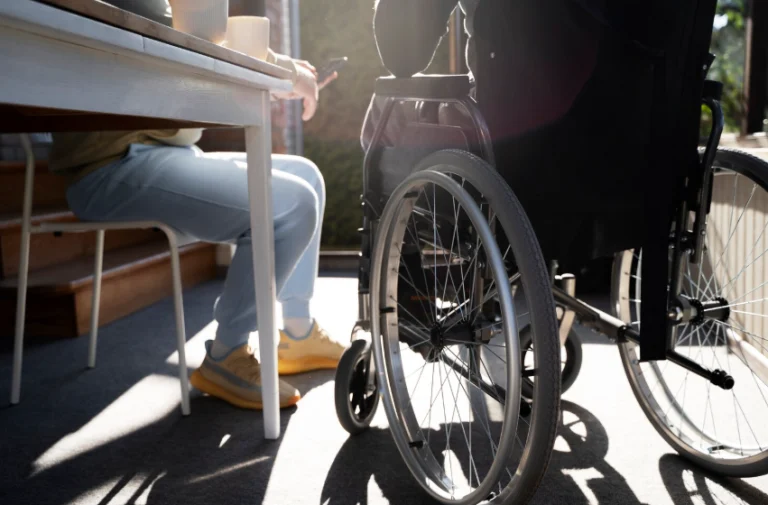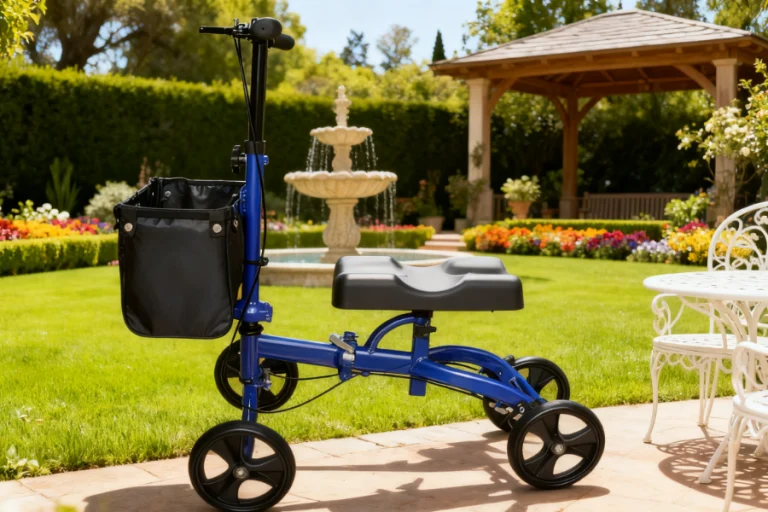
In the field of contemporary orthopedic rehabilitation, postoperative mobility solutions are undergoing a leapfrog transformation from traditional underarm crutches to mechanical augmentation tools. As an industry pioneer with 16 years of experience, Beiqin has provided more than 2.3 million high-quality assistive devices to medical institutions in more than 50 countries around the world.
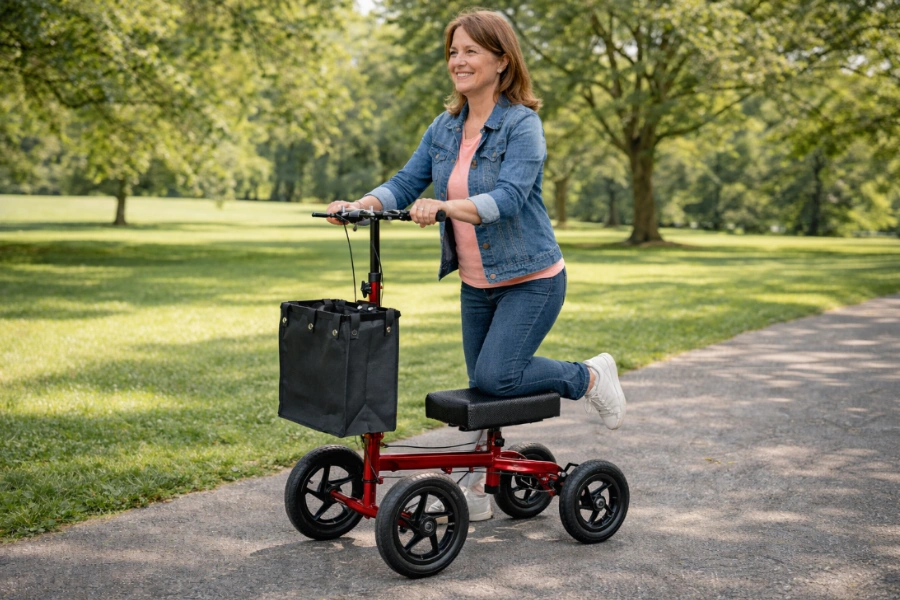
Through in-depth investigation of the clinical feedback from rehabilitation centers and the business demands of B2B partners, the modern medical system chose to eliminate crutches and fully switch to Knee Scooters. Its core logic is based on the significant advantages in the following five dimensions:
Safety serves as the key indicator that rehabilitation centers employ to assess mobility devices. Conventional axillary crutches depend substantially on the individual’s upper body power and spatial awareness, thereby forming a naturally precarious tripod foundation. Evidence indicates that unintended falls constitute a primary factor in operative setbacks during initial recovery phases. Contemporary knee walkers address this concern by supplying a persistent four-wheel foundation that sustains a balanced gravitational core, thus effectively alleviating the concern tied to load-bearing limitations on the inferior limbs.
The expansive-base configuration establishes a reliable support surface that averts overturning amid stationary halts and fluid motion across medical pathways.
Reactive manual brakes deliver accurate velocity management, thereby securing progression over inclined inclines or level institutional surfaces. As a result, operators achieve controlled motion without abrupt interruptions that could precipitate injury.
Through redirecting load from the axillary regions, these instruments eradicate the potential for crutch-related paralysis and axillary neural impairment, while simultaneously safeguarding the shoulders and wrists against recurrent pressure. Such redistribution consequently diminishes the incidence of subsequent complications over extended periods.
Therapeutic results are closely linked to the ease with which a patient navigates during the restorative period. Current rehabilitation guidelines underscore prompt activation to avert muscular degeneration and vascular concerns. Nevertheless, the bodily discomfort and exhaustion linked to crutches frequently provoke patient reluctance. Specialized mobility supports, such as the Beiqin Medical Knee Scooter, permit individuals to sustain activity with nominal effort, which cultivates an optimistic mental perspective and hastens the biological restoration mechanism.
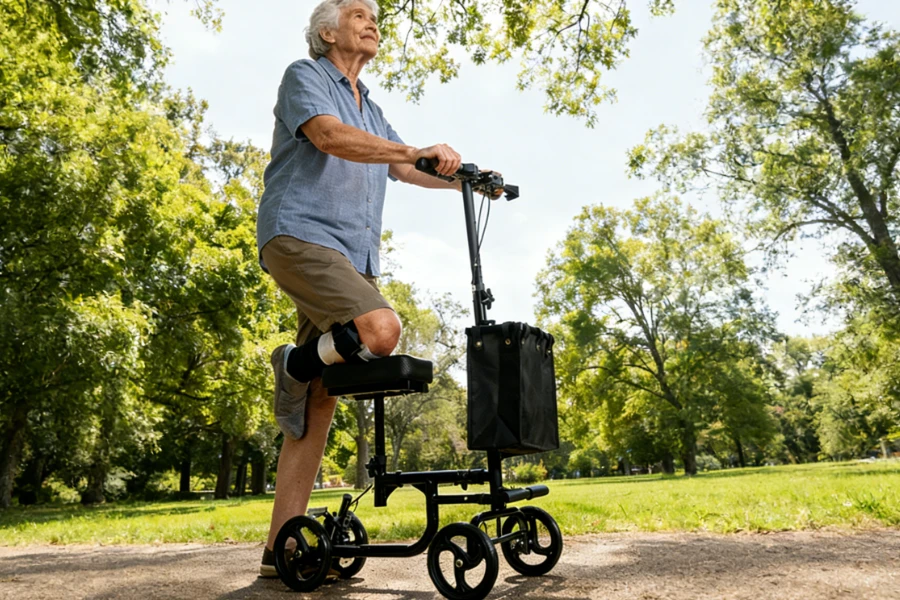
Preserving a vertical alignment precludes vertebral distortion and facilitates circulatory distribution throughout the body, a factor crucial for swift mending of operative wounds. Moreover, this positioning enhances general well-being amid routine engagements.
Compact foam interfaces apportion force uniformly along the tibia and knee joint, thereby forestalling dermal abrasion and focal discomfort during prolonged application. In turn, this configuration allows sustained utilization without escalating unease.
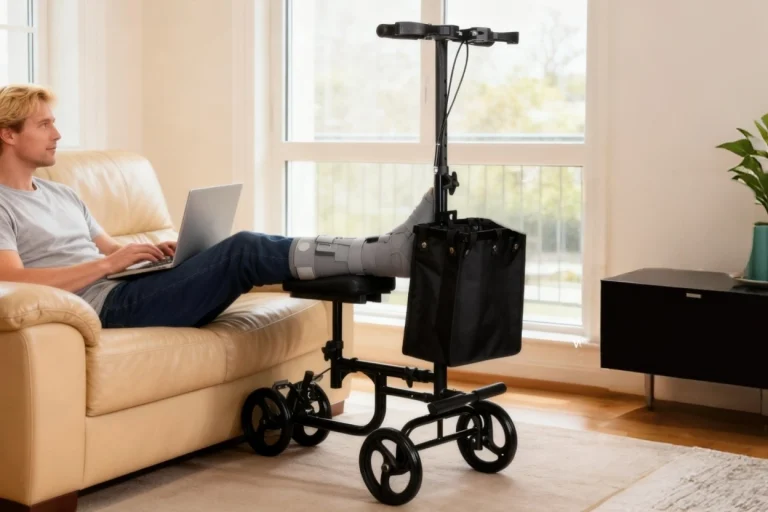
In contrast to crutches which engage both upper limbs, a knee walker affords stable positioning while liberating the hands for vital pursuits such as telephony or item transport. This facilitates minimal interruption to customary activities throughout convalescence.
For entities overseeing mobility inventories, the financial merit of an item hinges on its resilience and upkeep demands. Institutional-grade apparatus is constructed to endure frequent rotations within leasing contexts. Possessing a reserve of 180,000 units alongside a daily output of 6,000, Beiqin ascertains that vendors expand leasing activities absent supply constraints or elevated substitution expenses.
Employing fortified steel or aviation-standard aluminum, the framework’s robustness persists intact following extensive durations of therapeutic employment. This enduring attribute thereby curtails ongoing maintenance obligations.
The capacity to contract the structure markedly diminishes storage expenditures and streamlines the conveyance of apparatus to domiciliary care recipients. Accordingly, this optimizes operational efficiency with reduced spatial demands.
The robust composition of these constructs preserves substantial residual worth, enabling leasing operators to reclaim preliminary outlays via successive rental phases. This methodology thereby amplifies comprehensive fiscal returns.
Restorative settings span from restricted residential confines to irregular external terrains. Versatile guidance mechanisms and universal-terrain wheel variants confirm that one apparatus suffices for a patient’s complete restorative trajectory. Expedient modification attributes permit clinical personnel to adapt the equipment for assorted patient profiles within moments.
Implement-free calibration systems allow a solitary unit to suit diverse stature variations, thereby optimizing the efficacy of organizational stockpiles. This versatility extends accessibility across broader user cohorts.
Puncture-resistant tires or expanded inflatable wheels guarantee seamless traversal over floor coverings, ceramic surfaces, and external walkways devoid of stability forfeiture. The mitigates constraints in patients’ navigational routines.
The Beiqin Foldable Knee Scooter incorporates a swift contraction procedure, facilitating effortless relocation by attendants into automotive compartments for institutional appointments.
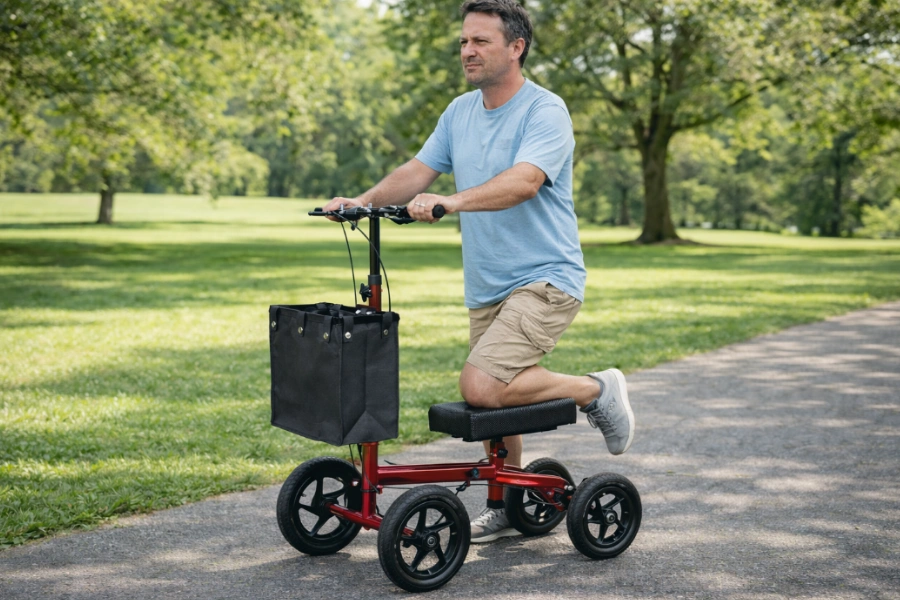
Contemporary facilities emphasize institutional esthetics and deployment simplicity. Therapeutic-standard equipment ought to embody the caliber of assistance rendered by the establishment. Via adopting segmented architectures necessitating no expert implements for configuration, medical practitioners concentrate more upon interpersonal engagement than preparatory arrangements.
Streamlined fabrication aesthetics coupled with superior surface treatments foster an refined therapeutic ambiance, thereby bolstering recipient confidence in the venue. Such visual elements cultivate an inviting restorative milieu.
Streamlined configuration protocols enable caregiving personnel or relatives to ready the apparatus within minutes, thereby expediting release procedures. This prompt initiation minimizes delays for beneficiaries.
Fortified undercarriage configurations ascertain that obese individuals obtain secure and respectable locomotion provisions amid their restoration. This inclusivity broadens the apparatus’s applicability to additional demographics.
Within the rivalrous domain of locomotion assists, allying with a producer merging intelligent digital fabrication and individual-oriented conceptualization yields a tactical benefit. Bearing 16 years of proficiency, the facility furnishes beyond mere components; it furnishes an integral service and support framework. By harnessing an extensive 180,000-unit repository and an established history with international commerce behemoths, the fabrication cadre empowers vendors and restorative centers to fulfill commercial imperatives with alacrity and exactitude. This amalgamation of magnitude and refined artisanship ascertains that each collaborator delivers the esteem of locomotion to those necessitating it foremost.
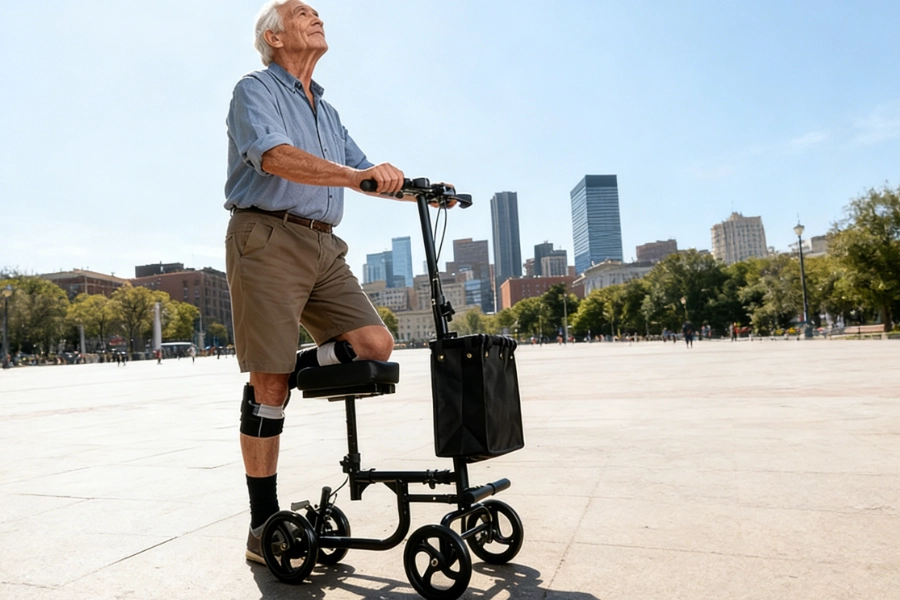
Q1: What makes a knee scooter safer than crutches for elderly patients?
A: The four-wheel base offers perpetual surface interface, thereby nullifying the equilibrium stipulations and superior-limb exertion which commonly precipitate tumbles during crutch usage.
Q2: Can the equipment be customized for specific brand requirements?
A: Yes, institutional producers proffer exhaustive OEM/ODM provisions, permitting bespoke identification, hue alterations, and operational adaptations to align with regional commercial exigencies.
Q3: How long does it take to receive a bulk order?
A: For substantial-output facilities, a 10,000-unit commission can ordinarily dispatch in 7 days, underpinned by a comprehensive dispatch-ready reserve.
Q4: Are these devices suitable for outdoor use on uneven surfaces?
A: Numerous variants incorporate universal-terrain wheels and binary-braking configurations expressly to manage heterogeneous external terrains such as promenades and aggregate trails securely.
Q5: Is it difficult for patients to transport the device alone?
A: Contractible variants with expeditious-detachment features are engineered to be portable and condensed, thereby permitting facile accommodation within automotive holds or archival compartments.
In the field of contemporary orthopedic rehabilitation, postoperative mobility solutions are undergoing a leapfrog transformation from traditional underarm crutches to mechanical augmentation tools. As an industry pioneer with 16 years of experience, Beiqin has provided more than 2.3 million high-quality assistive devices to medical institutions in more than 50 countries around the world.
Through in-depth investigation of the clinical feedback from rehabilitation centers and the business demands of B2B partners, the modern medical system chose to eliminate crutches and fully switch to Knee Scooters. Its core logic is based on the significant advantages in the following five dimensions:
Safety serves as the key indicator that rehabilitation centers employ to assess mobility devices. Conventional axillary crutches depend substantially on the individual’s upper body power and spatial awareness, thereby forming a naturally precarious tripod foundation. Evidence indicates that unintended falls constitute a primary factor in operative setbacks during initial recovery phases. Contemporary knee walkers address this concern by supplying a persistent four-wheel foundation that sustains a balanced gravitational core, thus effectively alleviating the concern tied to load-bearing limitations on the inferior limbs.
The expansive-base configuration establishes a reliable support surface that averts overturning amid stationary halts and fluid motion across medical pathways.
Reactive manual brakes deliver accurate velocity management, thereby securing progression over inclined inclines or level institutional surfaces. As a result, operators achieve controlled motion without abrupt interruptions that could precipitate injury.
Through redirecting load from the axillary regions, these instruments eradicate the potential for crutch-related paralysis and axillary neural impairment, while simultaneously safeguarding the shoulders and wrists against recurrent pressure. Such redistribution consequently diminishes the incidence of subsequent complications over extended periods.
Therapeutic results are closely linked to the ease with which a patient navigates during the restorative period. Current rehabilitation guidelines underscore prompt activation to avert muscular degeneration and vascular concerns. Nevertheless, the bodily discomfort and exhaustion linked to crutches frequently provoke patient reluctance. Specialized mobility supports, such as the Beiqin Medical Knee Scooter, permit individuals to sustain activity with nominal effort, which cultivates an optimistic mental perspective and hastens the biological restoration mechanism.
Preserving a vertical alignment precludes vertebral distortion and facilitates circulatory distribution throughout the body, a factor crucial for swift mending of operative wounds. Moreover, this positioning enhances general well-being amid routine engagements.
Compact foam interfaces apportion force uniformly along the tibia and knee joint, thereby forestalling dermal abrasion and focal discomfort during prolonged application. In turn, this configuration allows sustained utilization without escalating unease.
In contrast to crutches which engage both upper limbs, a knee walker affords stable positioning while liberating the hands for vital pursuits such as telephony or item transport. This facilitates minimal interruption to customary activities throughout convalescence.
For entities overseeing mobility inventories, the financial merit of an item hinges on its resilience and upkeep demands. Institutional-grade apparatus is constructed to endure frequent rotations within leasing contexts. Possessing a reserve of 180,000 units alongside a daily output of 6,000, Beiqin ascertains that vendors expand leasing activities absent supply constraints or elevated substitution expenses.
Employing fortified steel or aviation-standard aluminum, the framework’s robustness persists intact following extensive durations of therapeutic employment. This enduring attribute thereby curtails ongoing maintenance obligations.
The capacity to contract the structure markedly diminishes storage expenditures and streamlines the conveyance of apparatus to domiciliary care recipients. Accordingly, this optimizes operational efficiency with reduced spatial demands.
The robust composition of these constructs preserves substantial residual worth, enabling leasing operators to reclaim preliminary outlays via successive rental phases. This methodology thereby amplifies comprehensive fiscal returns.
Restorative settings span from restricted residential confines to irregular external terrains. Versatile guidance mechanisms and universal-terrain wheel variants confirm that one apparatus suffices for a patient’s complete restorative trajectory. Expedient modification attributes permit clinical personnel to adapt the equipment for assorted patient profiles within moments.
Implement-free calibration systems allow a solitary unit to suit diverse stature variations, thereby optimizing the efficacy of organizational stockpiles. This versatility extends accessibility across broader user cohorts.
Puncture-resistant tires or expanded inflatable wheels guarantee seamless traversal over floor coverings, ceramic surfaces, and external walkways devoid of stability forfeiture. The mitigates constraints in patients’ navigational routines.
The Beiqin Foldable Knee Scooter incorporates a swift contraction procedure, facilitating effortless relocation by attendants into automotive compartments for institutional appointments.
Contemporary facilities emphasize institutional esthetics and deployment simplicity. Therapeutic-standard equipment ought to embody the caliber of assistance rendered by the establishment. Via adopting segmented architectures necessitating no expert implements for configuration, medical practitioners concentrate more upon interpersonal engagement than preparatory arrangements.
Streamlined fabrication aesthetics coupled with superior surface treatments foster an refined therapeutic ambiance, thereby bolstering recipient confidence in the venue. Such visual elements cultivate an inviting restorative milieu.
Streamlined configuration protocols enable caregiving personnel or relatives to ready the apparatus within minutes, thereby expediting release procedures. This prompt initiation minimizes delays for beneficiaries.
Fortified undercarriage configurations ascertain that obese individuals obtain secure and respectable locomotion provisions amid their restoration. This inclusivity broadens the apparatus’s applicability to additional demographics.
Within the rivalrous domain of locomotion assists, allying with a producer merging intelligent digital fabrication and individual-oriented conceptualization yields a tactical benefit. Bearing 16 years of proficiency, the facility furnishes beyond mere components; it furnishes an integral service and support framework. By harnessing an extensive 180,000-unit repository and an established history with international commerce behemoths, the fabrication cadre empowers vendors and restorative centers to fulfill commercial imperatives with alacrity and exactitude. This amalgamation of magnitude and refined artisanship ascertains that each collaborator delivers the esteem of locomotion to those necessitating it foremost.
Q1: What makes a knee scooter safer than crutches for elderly patients?
A: The four-wheel base offers perpetual surface interface, thereby nullifying the equilibrium stipulations and superior-limb exertion which commonly precipitate tumbles during crutch usage.
Q2: Can the equipment be customized for specific brand requirements?
A: Yes, institutional producers proffer exhaustive OEM/ODM provisions, permitting bespoke identification, hue alterations, and operational adaptations to align with regional commercial exigencies.
Q3: How long does it take to receive a bulk order?
A: For substantial-output facilities, a 10,000-unit commission can ordinarily dispatch in 7 days, underpinned by a comprehensive dispatch-ready reserve.
Q4: Are these devices suitable for outdoor use on uneven surfaces?
A: Numerous variants incorporate universal-terrain wheels and binary-braking configurations expressly to manage heterogeneous external terrains such as promenades and aggregate trails securely.
Q5: Is it difficult for patients to transport the device alone?
A: Contractible variants with expeditious-detachment features are engineered to be portable and condensed, thereby permitting facile accommodation within automotive holds or archival compartments.