Safety for patients in extended care facilities and home environments depends on more than quality gear. It calls for strong dedication to strict production guidelines. For businesses needing steady suppliers, Beiqin offers 16 years of focused work in rehab support tools. The company runs a 20,000㎡ modern plant with over 60 pieces of specialized machinery. This advanced firm produces as many as 6,000 items each day. Clients can choose OEM/ODM services or quick 7-day shipping for large runs of 10,000 units. The main goal stays on “dignity through technology.” As a direct production site, the firm mixes machine accuracy with hands-on checks. This ensures every safety rail fits worldwide market needs.
Following global safety rules forms the basic shield against bed accidents. The Entrapment Risk Assessment Rule points out exact areas where people could get stuck. Such entrapment might cause severe harm. Experts need to focus on these rules. This keeps operations in line with regulations and protects patient health.
Entrapment zones often include the openings between rail bars. They also cover the space between the rail and the mattress. In addition, they involve spots near the headboard and footboard. Regulatory groups define these seven zones clearly. The aim is to avoid pressure on the head, neck, or chest. Understanding these helps prevent common dangers.
Ignoring these spaces frequently leads to breaks, breathing problems, or blocked circulation. In care centers, such events bring major legal costs. They also harm the standing of service providers. Proper handling reduces these threats effectively. Facilities can then focus on better care outcomes.
Leading makers match their work to FDA and ISO rules. They use tough carbon steel for strength. Plus, they run load tests on weld spots. This stops the parts from flexing or moving under quick force. Compliance builds trust in the products. It supports safe use in various settings.
Safety goes beyond the rail design alone. It depends on how the rail fits next to the mattress. A space over 4.75 inches in key spots counts as a clear break of safety rules. Preventing such gaps keeps users secure. Regular checks help maintain this standard over time.
Picking suitable hardware means examining beyond the outer look. You should check the real build quality. Strong materials and user-friendly shapes remain essential for steady performance in busy health areas. These choices ensure long-lasting support.
Sturdy carbon steel handles loads up to 300 lbs without weakening. This choice marks expert-level building. It provides reliable hold for daily use. As a result, the frames last longer in tough conditions.
A grip with non-slip foam or rough texture lets users shift position safely. They avoid slipping during movement. Firmness begins at the point where the hand meets the rail. This design aids independent actions. Patients gain confidence in their support.
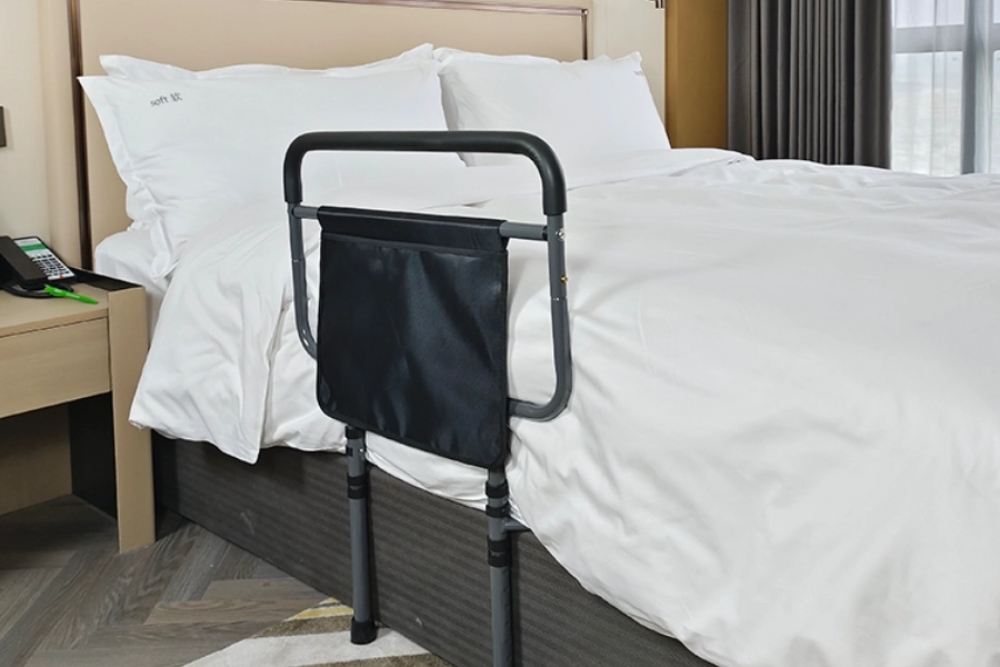
Current designs snap into place without tools. For example, a Bed Rail for Elderly with Storage Pocket uses a flat-tube base. This base slides under the mattress. The user’s weight adds extra hold. Such features make setup simple and secure.
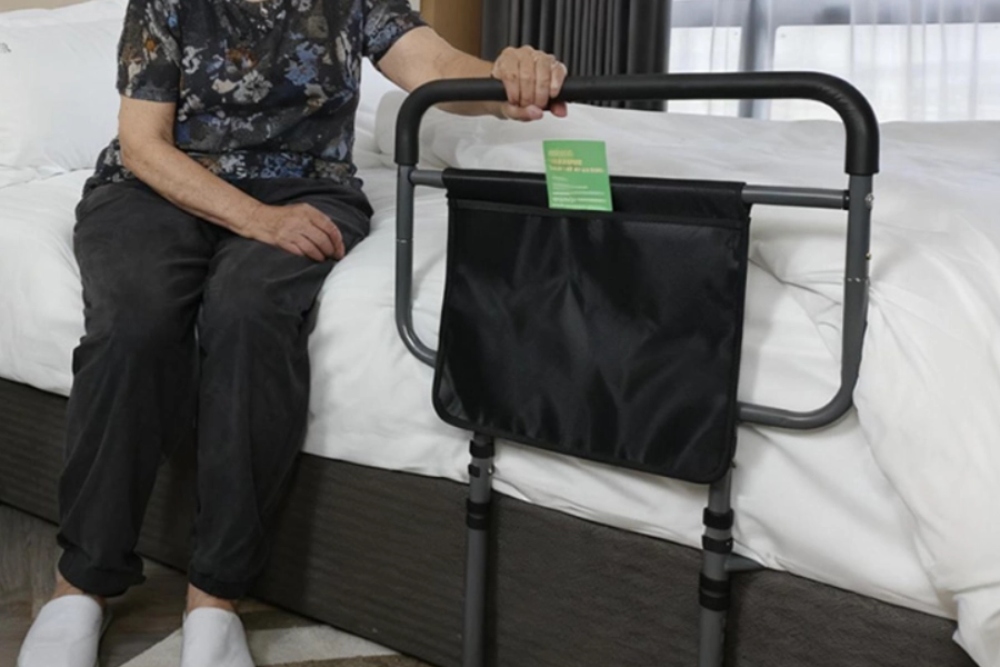
Uniform designs prove hard in medical work. Good rails must work on twin to king-size beds. They also suit hospital adjustable types. All this happens without losing the close fit safety demands. Versatility cuts down on special orders. It streamlines inventory for providers.
Setup turns safety plans into practice. The finest rail can fail if attached loosely or placed wrong. A planned method cuts down on setup mistakes. This leads to better overall protection.
Mattress heights differ a lot. Measuring the depth is key. This ensures the grab bar reaches waist height for the person. At the same time, it stays high enough to block rolls over the top. Accurate checks prevent fit issues. They support safe daily use.
The base needs to lie even on the bed slats or box spring. If it rocks or tips, the setup lacks steadiness. Over time, this creates risky spaces for entrapment. Proper placement avoids such problems. It keeps the rail firm during activity.
Straps often pull the rail close to the mattress side. This removes any looseness when someone presses full weight against it. Tight fits eliminate dangers. Users benefit from consistent barriers. Adjustments ensure long-term reliability.
Parts can loosen from regular shaking. In good care homes, staff check bolts and pins monthly. This routine spots wear early. It prevents accidents from loose fittings. Ongoing care extends the rail’s safe life.
Easy upkeep affects costs in health centers. Choosing items simple to wipe down and hard to damage cuts labor over time. This approach improves efficiency. Facilities save resources for patient needs.
Good powder coating avoids chips and blocks rust. It holds up against strong cleaning chemicals in clinics. This finish eases daily routines. Staff spend less time on fixes. Products stay like new longer.
Many rails, such as the Safety Bed Rails with Storage Pocket, have removable holders. These come in washable materials like nylon or polyester. They stop germ or dust buildup. Easy cleaning supports health rules. Users enjoy hygienic storage options.
Thicker tubes raise upfront price a bit. However, they stop bending seen in low-cost aluminum from stores. Strong builds last through heavy use. This reduces replacement needs. Centers gain value from durable choices.
In big operations, quick assembly under five minutes helps. No special tools make it simple for teams. This speeds up responses to needs. Maintenance runs smoother overall. Facilities handle more with less effort.
Picking a supplier with solid history manages supply risks best. Beiqin blends large-scale digital production with care for medical items. This mix ensures steady quality. Partners receive dependable support.
The plant has 16 years in the field. It offers full changes from 3D models in 3 days to big runs. This range suits brands creating special safety gear. Customization meets market demands. It speeds product launches.
Teams adjust heights for larger users or add custom pockets. The design group manages tough requests. Trading firms often cannot match this. Tailored work fits exact needs. It improves care delivery.
Items ship to over 50 nations already. The factory knows certification rules for places like North America and Europe. This knowledge simplifies exports. Businesses avoid compliance hurdles. Global reach grows easily.
Stock holds 180,000 units with double checks. Machines ensure even welds. Humans verify the feel of final builds. This process catches flaws early. Products arrive ready for safe use.
Minor design tweaks often aid daily tasks most. New ideas should fix actual issues. For example, they handle spots for phones or alerts at night. These elements boost practical help.
Pockets hold key items close by. This cuts reaches that could cause falls. The basic feature adds real worth for users. It supports easier routines. Caregivers note fewer incidents.
Some rails must move with users. Folding types pack flat for travel. Families keep safety in hotels or short stays. Portability fits changing lives. It maintains protection anywhere.
Metal bases can slide on contact. Rubber pads below the bars add grip. This holds the unit steady through active nights. The change prevents shifts. Safety improves without extra effort.
The field heads to combined designs. Simple bars now act as useful home pieces. They fit naturally into living spaces. This evolution aids comfort and function.
Designs grow warmer in style. Finishes like black or wood replace shiny metal from clinics. This helps seniors feel at ease in homes. The change supports emotional well-being. It blends aid with daily life.
Small details count a lot. Input from many handle tests shapes grips. They ease strain for those with joint issues. Bed leaving becomes simpler. Focus on users drives better tools.
Rules get stricter around the world. Makers must keep up with changes. Choosing professional solutions keeps stock current and safe. This planning secures future sales. It aligns with ongoing standards.
Q1: Can these bed rails be used on adjustable hospital beds?
A: Most professional rails with flat-tube bases are compatible with adjustable beds, provided the straps are secured to the moving part of the frame to prevent binding.
Q2: What is the primary cause of bed rail entrapment?
A: Entrapment is usually caused by using an improperly sized mattress or failing to tighten the safety straps, creating a gap between the rail and the bed.
Q3: How often should the installation be checked for safety?
A: It is best practice to perform a quick visual check daily and a thorough tension check once a month or whenever the bed linens are changed.
Q4: Is the storage pocket easy to clean?
A: Yes, the pockets are typically made of durable nylon or polyester and can be removed for machine washing to maintain hygiene standards.
Q5: Do you offer bulk discounts for nursing homes or distributors?
A: As a source factory with 16 years of experience, competitive wholesale pricing and customized service support are available for bulk inquiries and long-term partnerships.
Safety for patients in extended care facilities and home environments depends on more than quality gear. It calls for strong dedication to strict production guidelines. For businesses needing steady suppliers, Beiqin offers 16 years of focused work in rehab support tools. The company runs a 20,000㎡ modern plant with over 60 pieces of specialized machinery. This advanced firm produces as many as 6,000 items each day. Clients can choose OEM/ODM services or quick 7-day shipping for large runs of 10,000 units. The main goal stays on “dignity through technology.” As a direct production site, the firm mixes machine accuracy with hands-on checks. This ensures every safety rail fits worldwide market needs.
Following global safety rules forms the basic shield against bed accidents. The Entrapment Risk Assessment Rule points out exact areas where people could get stuck. Such entrapment might cause severe harm. Experts need to focus on these rules. This keeps operations in line with regulations and protects patient health.
Entrapment zones often include the openings between rail bars. They also cover the space between the rail and the mattress. In addition, they involve spots near the headboard and footboard. Regulatory groups define these seven zones clearly. The aim is to avoid pressure on the head, neck, or chest. Understanding these helps prevent common dangers.
Ignoring these spaces frequently leads to breaks, breathing problems, or blocked circulation. In care centers, such events bring major legal costs. They also harm the standing of service providers. Proper handling reduces these threats effectively. Facilities can then focus on better care outcomes.
Leading makers match their work to FDA and ISO rules. They use tough carbon steel for strength. Plus, they run load tests on weld spots. This stops the parts from flexing or moving under quick force. Compliance builds trust in the products. It supports safe use in various settings.
Safety goes beyond the rail design alone. It depends on how the rail fits next to the mattress. A space over 4.75 inches in key spots counts as a clear break of safety rules. Preventing such gaps keeps users secure. Regular checks help maintain this standard over time.
Picking suitable hardware means examining beyond the outer look. You should check the real build quality. Strong materials and user-friendly shapes remain essential for steady performance in busy health areas. These choices ensure long-lasting support.
Sturdy carbon steel handles loads up to 300 lbs without weakening. This choice marks expert-level building. It provides reliable hold for daily use. As a result, the frames last longer in tough conditions.
A grip with non-slip foam or rough texture lets users shift position safely. They avoid slipping during movement. Firmness begins at the point where the hand meets the rail. This design aids independent actions. Patients gain confidence in their support.
Current designs snap into place without tools. For example, a Bed Rail for Elderly with Storage Pocket uses a flat-tube base. This base slides under the mattress. The user’s weight adds extra hold. Such features make setup simple and secure.
Uniform designs prove hard in medical work. Good rails must work on twin to king-size beds. They also suit hospital adjustable types. All this happens without losing the close fit safety demands. Versatility cuts down on special orders. It streamlines inventory for providers.
Setup turns safety plans into practice. The finest rail can fail if attached loosely or placed wrong. A planned method cuts down on setup mistakes. This leads to better overall protection.
Mattress heights differ a lot. Measuring the depth is key. This ensures the grab bar reaches waist height for the person. At the same time, it stays high enough to block rolls over the top. Accurate checks prevent fit issues. They support safe daily use.
The base needs to lie even on the bed slats or box spring. If it rocks or tips, the setup lacks steadiness. Over time, this creates risky spaces for entrapment. Proper placement avoids such problems. It keeps the rail firm during activity.
Straps often pull the rail close to the mattress side. This removes any looseness when someone presses full weight against it. Tight fits eliminate dangers. Users benefit from consistent barriers. Adjustments ensure long-term reliability.
Parts can loosen from regular shaking. In good care homes, staff check bolts and pins monthly. This routine spots wear early. It prevents accidents from loose fittings. Ongoing care extends the rail’s safe life.
Easy upkeep affects costs in health centers. Choosing items simple to wipe down and hard to damage cuts labor over time. This approach improves efficiency. Facilities save resources for patient needs.
Good powder coating avoids chips and blocks rust. It holds up against strong cleaning chemicals in clinics. This finish eases daily routines. Staff spend less time on fixes. Products stay like new longer.
Many rails, such as the Safety Bed Rails with Storage Pocket, have removable holders. These come in washable materials like nylon or polyester. They stop germ or dust buildup. Easy cleaning supports health rules. Users enjoy hygienic storage options.
Thicker tubes raise upfront price a bit. However, they stop bending seen in low-cost aluminum from stores. Strong builds last through heavy use. This reduces replacement needs. Centers gain value from durable choices.
In big operations, quick assembly under five minutes helps. No special tools make it simple for teams. This speeds up responses to needs. Maintenance runs smoother overall. Facilities handle more with less effort.
Picking a supplier with solid history manages supply risks best. Beiqin blends large-scale digital production with care for medical items. This mix ensures steady quality. Partners receive dependable support.
The plant has 16 years in the field. It offers full changes from 3D models in 3 days to big runs. This range suits brands creating special safety gear. Customization meets market demands. It speeds product launches.
Teams adjust heights for larger users or add custom pockets. The design group manages tough requests. Trading firms often cannot match this. Tailored work fits exact needs. It improves care delivery.
Items ship to over 50 nations already. The factory knows certification rules for places like North America and Europe. This knowledge simplifies exports. Businesses avoid compliance hurdles. Global reach grows easily.
Stock holds 180,000 units with double checks. Machines ensure even welds. Humans verify the feel of final builds. This process catches flaws early. Products arrive ready for safe use.
Minor design tweaks often aid daily tasks most. New ideas should fix actual issues. For example, they handle spots for phones or alerts at night. These elements boost practical help.
Pockets hold key items close by. This cuts reaches that could cause falls. The basic feature adds real worth for users. It supports easier routines. Caregivers note fewer incidents.
Some rails must move with users. Folding types pack flat for travel. Families keep safety in hotels or short stays. Portability fits changing lives. It maintains protection anywhere.
Metal bases can slide on contact. Rubber pads below the bars add grip. This holds the unit steady through active nights. The change prevents shifts. Safety improves without extra effort.
The field heads to combined designs. Simple bars now act as useful home pieces. They fit naturally into living spaces. This evolution aids comfort and function.
Designs grow warmer in style. Finishes like black or wood replace shiny metal from clinics. This helps seniors feel at ease in homes. The change supports emotional well-being. It blends aid with daily life.
Small details count a lot. Input from many handle tests shapes grips. They ease strain for those with joint issues. Bed leaving becomes simpler. Focus on users drives better tools.
Rules get stricter around the world. Makers must keep up with changes. Choosing professional solutions keeps stock current and safe. This planning secures future sales. It aligns with ongoing standards.
Q1: Can these bed rails be used on adjustable hospital beds?
A: Most professional rails with flat-tube bases are compatible with adjustable beds, provided the straps are secured to the moving part of the frame to prevent binding.
Q2: What is the primary cause of bed rail entrapment?
A: Entrapment is usually caused by using an improperly sized mattress or failing to tighten the safety straps, creating a gap between the rail and the bed.
Q3: How often should the installation be checked for safety?
A: It is best practice to perform a quick visual check daily and a thorough tension check once a month or whenever the bed linens are changed.
Q4: Is the storage pocket easy to clean?
A: Yes, the pockets are typically made of durable nylon or polyester and can be removed for machine washing to maintain hygiene standards.
Q5: Do you offer bulk discounts for nursing homes or distributors?
A: As a source factory with 16 years of experience, competitive wholesale pricing and customized service support are available for bulk inquiries and long-term partnerships.