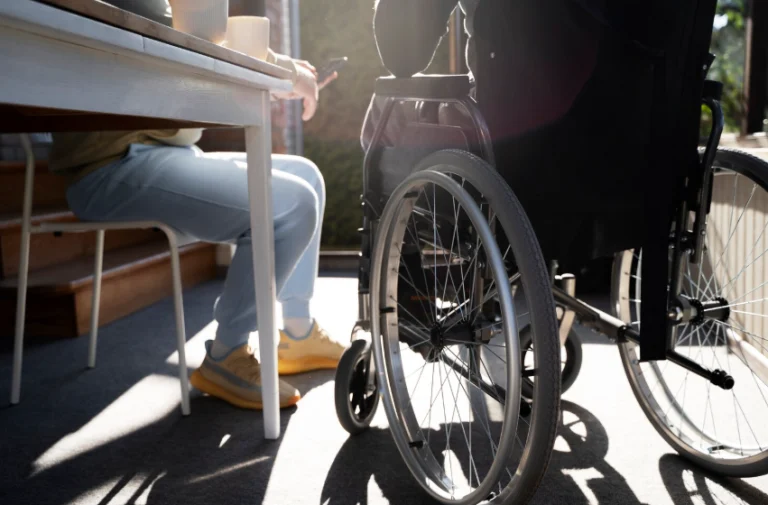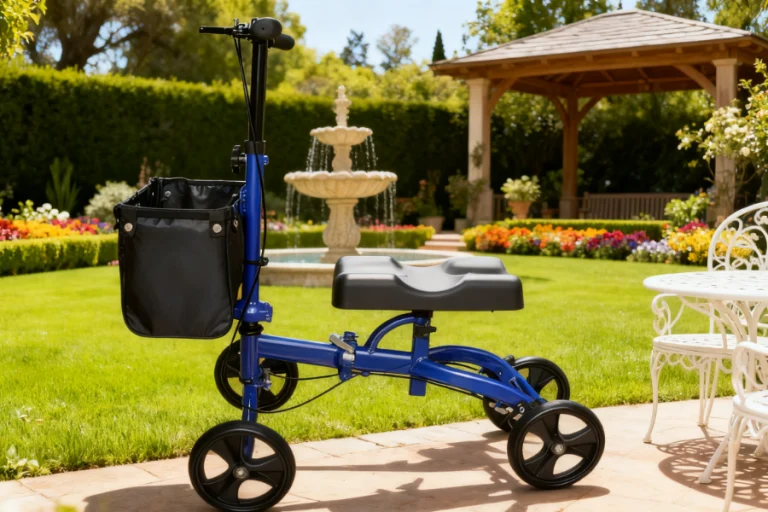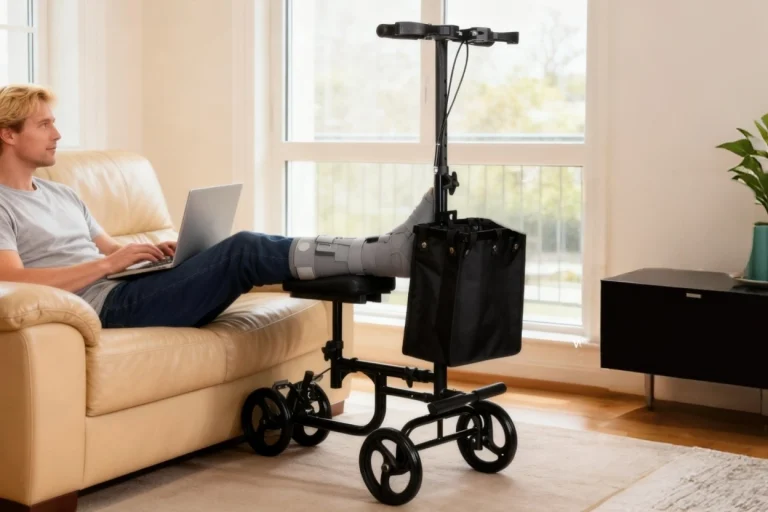
A foldable wheelchair can give a mobility-aid distributor a practical product for home care, rehabilitation, travel, and institutional channels. The commercial question is larger than whether the frame folds. Buyers also need to assess product positioning, packing, sample approval, repeat-order capacity, and the supplier’s ability to keep communication clear after the quotation.
For distributors and OEM buyers, Yongkang Beiqin Industry And Trade Co., Ltd. offers a broader sourcing conversation. The company works across wheelchairs, walkers, rollators, knee scooters, commode chairs, shower chairs, safety rails, and other assistive devices. That wider portfolio can help a buyer build a related mobility range instead of treating a foldable wheelchair as an isolated SKU.
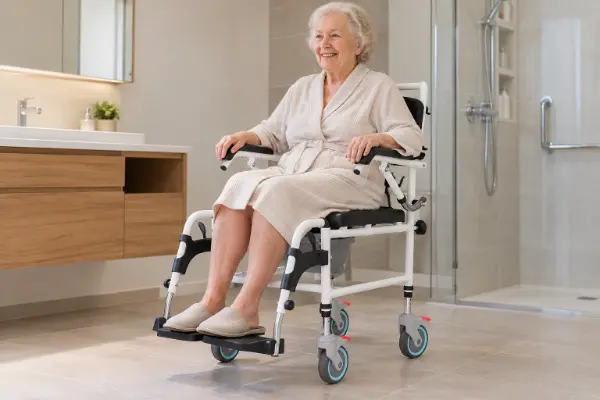
A foldable wheelchair is suitable for many different sales channels. The Home-care dealer needs a small mobility product for families. The Rehabilitation supplier includes the recovery range product. The Distributor of care institutions is looking for products which are more handy for storage, for transportation and which can be included in a bigger order of medical equipment.
Positioning a product on the market depends on the buyer. Someone buying for occasional users will focus on storage/transport, someone buying for a daily-care program will weight up durability/seating support/maintenance/spare parts. This should be clearly outlined in the purchasing brief before the supplier draws up a quote.
Review Yongkang Beiqin Industry And Trade Co., Ltd’s full company and factory information and compare against your specific channel product requirements.
A professional review of a foldable wheelchair needs to look beyond simple appearance and check a number of important points when comparing suppliers.
Such questions enable a comparison of suppliers and also have the advantage of avoiding products that look good online but are not suitable for the buyer’s warehouse, retail or care-service workflow.
A foldable wheelchair is typically a product that is listed in the same category as other mobility products. For example a buyer may purchase a foldable wheelchair to be used in conjunction with a walker for short periods of time within the home. This may also be combined with a rollator which is used by people who can still walk but require regular rest breaks. A commode chair may also be purchased for home care purposes and therefore this type of category planning can aid cross-selling and make replenishment easier.
Yongkang Beiqin Industry And Trade Co., Ltd’s wider range of assistive devices includes Walkers, Rollators, Commode Chairs, Shower Chairs and Safety Rails and many more products to support people with disabilities. Assistance devices are compared in 3 categories: Walkers, Rollators and Commode Chairs.
The key commercial benefit of matching products with real use cases is that a distributor can start by offering the foldable wheelchair and then subsequently add a range of related products as customer demand, channel information and after-sales service capacity allows.
Yongkang Beiqin Industry And Trade Co., Ltd. specializes in producing assistive devices and rehabilitation equipment for over 16 years. Our factory covers an area of over 20,000 square meters with over 60 sets of professional machines and 4 production lines.
Beiqin’s daily production capacity exceeds 6,000 units while the annual capacity is in excess of 2.3 million units. This information gives buyers an insight into the manufacturer’s massive operation, however this is in addition to product specific confirmation. A foldable wheelchair’s production schedule can vary greatly depending upon the particular configuration, order content, packaging requirements etc. and the manufacturer’s general production schedule.
For a buyer, the next step is to ask how the chosen wheelchair fits into that system. Useful questions include sample timing, approval checkpoints, carton preparation, inspection arrangements, and the contact responsible for follow-up.
Yongkang Beiqin Industry And Trade Co., Ltd advises current warehouse inventory of about 180,000 units with daily packing capacity over 3,000 pieces. Available stock can be dispatched within 12 hours. Samples can be prepared within 3 days and 10,000 units can be dispatched within 7 days under proper order arrangement.
The information above is intended as a rough guide only and must be confirmed for specific products, quantities, packaging and destinations and against the precise terms and conditions of an order prior to its inclusion in any marketing or customer contract and confirmation obtained in writing.
The specific needs of cartons, documents and delivery should be defined for retail replenishment, for institutional sales and for project orders, since each of these may be sold through different channels.
Private-label buyers look for more than just a logo. In addition to the design of packaging, manuals, carton labels and product labels, buyers also require market-specific information and a planned model range. The earlier these requirements are communicated the better it can be assessed whether something can be delivered at all and within which time frame.
Yongkang Beiqin’s OEM/ODM cooperation page is a good starting point for these discussions. A useful project brief would outline the intended market, proposed sales channels, languages, packaging, quantities, samples and any other necessary documentation for Beiqin’s internal approval.
Treating OEM/ODM as a single package is wrong. Support for a product depends on various factors, such as the changes a customer wants to implement, the order quantity, the scope of packaging services and the corresponding approval processes. These boundaries are needed to protect a customer’s launch strategy and a supplier’s production schedules.
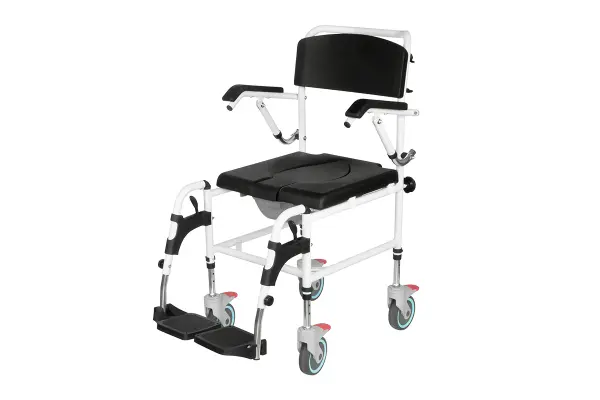
When buying a foldable wheelchair, compare the suppliers’ offers not only on the basis of the unit price, but also of the complete offer. Making a simple list for the comparison with all the important points is sufficient.
| Buying factor | What to confirm |
| Product fit | Target user, channel, configuration, and intended use |
| Sample process | Sample lead time, approval steps, and revision handling |
| Supply scale | Production setup, stock position, and repeat-order planning |
| Packing | Carton details, labels, manuals, and shipping information |
| Customization | OEM/ODM scope, artwork, and market requirements |
| Follow-up | Quotation owner, documents, inspection, and after-sales route |
Comparing prices helps a trade buyer to find out about hidden costs. A low price offer may not be the best option if the supplier does not provide a clear sample plan and a reliable packing instruction. A slightly higher price offer might be more acceptable if the supplier’s offer includes the necessary documents and follow-up through the proper channels.
In addition to testing product aspects, the sample must also answer commercial questions. Check how the wheelchair is packaged, read through the manual, check the finish against approved samples and check the product information against the intended channel of distribution.
Changes should be recorded in one document, such as the model that has been approved, the packaging version, the language on the labels, the inspection points and the shipment notes. This allows the buyer and supplier to refer to the same document when placing the first repeat order.
For post-sample coordination, Beiqin’s service and support route through service and support can be steered towards quotations, documents, order confirmation and follow-up.
Create a short sourcing brief to contact suppliers of foldable wheelchairs. This brief needs to contain the information of the target market, the expected user group, the first-order quantity, the packaging wishes, the destination, the sample deadline and possible OEM/ODM wishes. After having sent the brief ask the supplier to confirm in writing the model, the sample plan, the stock position, the delivery terms and which documents are required.
The clear specification for buying a foldable wheelchair allows potential suppliers to be compared more effectively by the buyer. Suppliers are then able to provide a price for a real project rather than an anonymous quote for a unknown product.
A distributor should check if a product fits his distribution strategy, if he gets sufficient sample support, if he gets all necessary information for the packing, if he can place repeat orders, if he gets the delivery conditions under which he can offer the product to his customers. The supplier must explain which of these points have to be clarified before he can give a firm delivery time or private-label packing.
We can talk about OEM/ODM cooperation for Beiqin’s assistive devices projects. The target market and the required product features, the packaging scope, languages to be used, the estimated quantity to be produced as well as the sample requirements need to be clearly specified. The final support will depend on the required changes and the confirmed order conditions.
Yongkang Beiqin reports three-day sample preparation and seven-day delivery for 10,000 units under the proper order arrangement. Available stock can be dispatched within 12 hours. Buyers should confirm the selected model, quantity, packaging, destination, and order conditions before relying on these planning references.