The first problem on a bed rail listing may be a number, not a photograph. A customer measures the space beside a bed; a catalog manager copies the product page; the carton arrives with a separate set of figures. For the 708G, the latest dimension drawing gives an assembled size of L53 × W46 × H51 cm. The SKU sheet should use these product dimensions and keep the carton measurements in a separate packing field before promising a fit or printing labels.
The 708G bed assist rail from Beiqin has its own product page. The listed rail is steel framed, with a foam grip and fabric bag; assembly is described as tool-free. The supplied drawing shows an assembled size of L53 × W46 × H51 cm and marks a separate 9 cm dimension for the folded configuration. Keep the folded measurement separate from the assembled height. The drawing does not state the actual height-adjustment endpoints, so 51 cm should be treated as the illustrated assembled height, not as the full adjustment range.
Use the supplied drawing as the dimensional reference for the current 708G. Before publishing, confirm that its revision matches the production sample and current instructions. Carry the drawing date and revision into the SKU sheet, store page and packaging file so that all three use the same measurements.
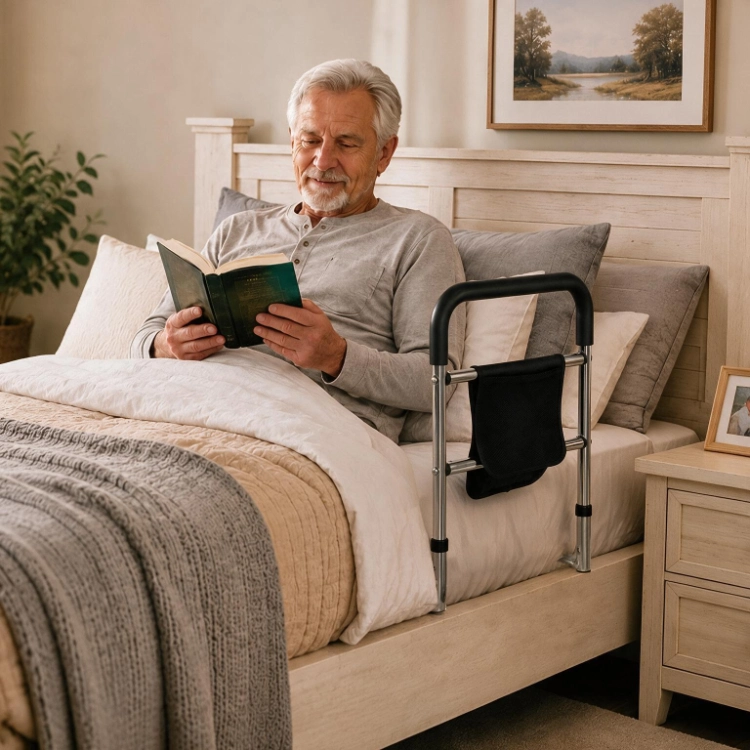
The supplied dimension drawing identifies the steel-frame 708G at L53 × W46 × H51 cm when assembled and marks a separate 9 cm dimension for the folded configuration. The product record also gives 2.6 kg net, 3.3 kg gross, one unit per 48 × 10 × 57 cm carton, and a stated 136 kg user maximum. The carton figures describe packaging, not the assembled rail. The current page adds a fabric bag to the description. Confirm that the drawing revision matches the model being ordered before using these values.
Use L53 × W46 × H51 cm as the assembled product size shown in the supplied drawing. The separate 9 cm measurement belongs to the folded configuration; it is not the assembled height or the height-adjustment range. The drawing shows one assembled height, but does not state the lowest and highest permitted settings. Keep the adjustment range off the listing until the current instructions or a confirmed drawing provide the endpoints and explain the lock positions.
The drawing gives three overall dimensions: 53 cm in length, 46 cm in width and 51 cm in assembled height. Enter them consistently as L53 × W46 × H51 cm. The 51 cm measurement is the overall height shown in the drawing; it should not be presented as the clearance above the mattress or as the full height-adjustment range. For fit decisions, compare the assembled rail and base with the actual bed frame, mattress and retention arrangement. Measure an approved sample at the stated configuration and record the setting.
On the RFQ, attach the supplied drawing and ask Beiqin to confirm that L53 × W46 × H51 cm applies to the current 708G revision and production sample. Request the lowest and highest permitted height settings, the way each position locks, and confirmation of the separate 9 cm folded measurement. If adjustment changes a retention part’s position, include that in the drawing. The buyer can then test the approved dimensions against the sample instead of relying on an unmarked number.
Keep the 708G record to one approved sheet. Put a date beside the drawing and a revision beside the model. The web editor, packaging designer and sales team can all work from that file, and a later change will have a visible starting point.
The live listing calls the item “Portable steel bed handrail-708G” and states a 100-piece MOQ. Keep the exact model label in the purchasing file. Put the minimum order quantity in the commercial field, away from dimensions and user-weight data.
| SKU field | Current drawing value or open question |
| Model | 708G portable steel bed handrail |
| Assembled size | Current drawing: L53 × W46 × H51 cm (assembled); separate 9 cm dimension when folded |
| Adjustment | Page says adjustable; range, increments and locking positions not stated |
| Weight | 2.6 kg net unit; 3.3 kg gross carton |
| Packing | One per carton; 48 × 10 × 57 cm listed carton (packaging dimensions, not product size) |
| User limit | 136 kg stated maximum; confirm for current revision and instructions |
| Accessories | Fabric bag described; confirm exact contents and part list |
| Evidence | Current dimension drawing, instructions, sample approval and applicable market documents |
Keep the adjustment range as an open field. The page says “height-adjustable,” but does not give setting numbers. The supplied drawing confirms the assembled size as L53 × W46 × H51 cm and shows a separate 9 cm dimension for the folded configuration; it does not establish the full adjustment range or locking positions. The quoted 136 kg limit is a separate fact and cannot answer the fit question.
The neighboring 707B page describes a very different size: L37 × W71 × H85–103 cm, 4.0 kg net and a 72 × 11 × 62.5 cm carton. By comparison, 708G’s assembled size is L53 × W46 × H51 cm; its folded configuration is marked at 9 cm, its published box is 48 × 10 × 57 cm, and the unit is 2.6 kg net. Those are easy details to cross-wire when a shared photo folder contains both models. Label the sample and every product image with its code before approving either listing.
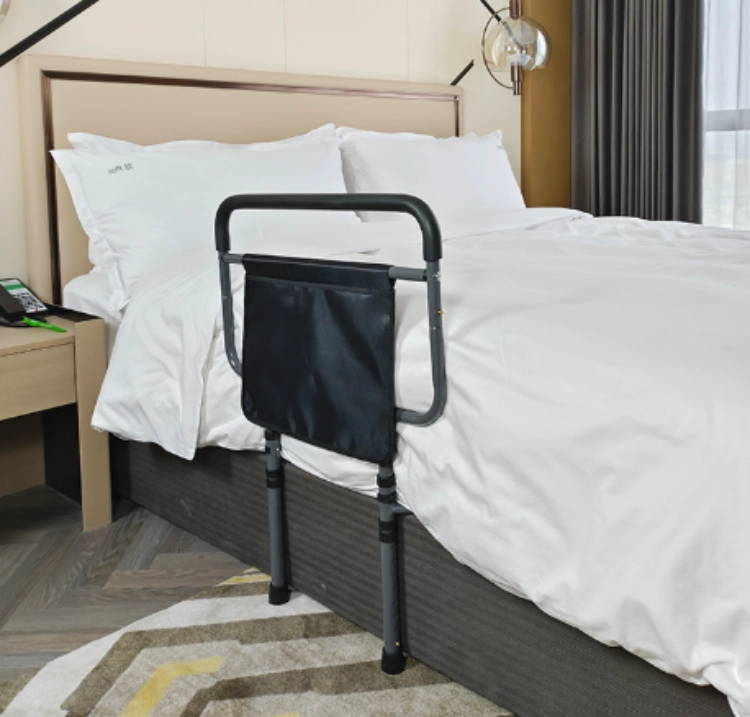
The sample request needs the revision number from the proposed bulk order. On arrival, start a simple receiving record: carton label, everything unpacked, and the instruction leaflet used to assemble it. Document whether retention parts and fasteners are supplied; photograph each supplied part and its installation. Measure only after assembly, and write down the rail setting beside each reading. If Beiqin has not marked a measurement point, leave that field unanswered and send back an annotated photo.
The sample review answers an identity question: is the delivered frame the one described by the approved sheet? It cannot certify a regulation or prove fit on every bed. Beiqin’s bed assist rail installation article discusses the wider mattress-and-frame issue. For this listing, obtain the retention instructions written for the 708G revision in hand.
A mattress may compress after a person lies down, changing the space beside the rail. The FDA’s consumer and caregiver advice asks for regular gap checks and proper attachment of the retention system under the manufacturer’s instructions. The 708G assembled size of L53 × W46 × H51 cm helps with a purchasing record, but it cannot predict the gap on an untested bed.
There is a regulatory line to check before a US listing goes out. Beiqin’s 708G page refers to 16 CFR Part 1270 and describes a 48-hour load result, yet it does not link the 708G test report or General Certificate of Compliance. Ask for documents tied to the quoted revision. The CPSC business FAQ describes the rule and the domestic manufacturer or importer’s GCC obligation for covered adult portable bed rails.
The approval file should name the dated 708G instructions, warning artwork, relevant test material and GCC where required. Write down who supplied each file. Beiqin’s page also lists company and market credentials together; that list cannot identify the exact test configuration inside this carton. Match the evidence to model, revision and destination market before publishing a compliance line.
Entrapment and falls are among the hazards described on the FDA safety concerns page. A comfortable grip does not settle those risks. Make the retention directions, warnings and compatibility limits easy to find in the listing and inside the delivered carton.
For now, the product information identifies a steel-frame 708G with a foam-padded grip and fabric bag. The supplied drawing shows an assembled size of L53 × W46 × H51 cm and a separate 9 cm dimension for the folded configuration. The product record also gives 136 kg as the stated user limit, plus unit and carton data. It calls the rail adjustable and tool-free to assemble, but does not give the setting range. Keep exact adjustment numbers out of the listing until the current instructions confirm them.
A compatibility question in the store can ask about the frame, mattress thickness, softness and approved retention method. That beats a blanket “fits all.” The FDA also asks caregivers to consider confusion, restlessness and similar factors that can make entrapment or falls more likely. A person with those risks needs an individual decision with the responsible clinician or caregiver, beyond anything the 708G table can say.
Which size should a listing use?
The supplied drawing shows an assembled size of L53 × W46 × H51 cm. It also marks a separate 9 cm dimension for the folded configuration. Use L53 × W46 × H51 cm in the product-size field; keep the carton size (48 × 10 × 57 cm) in the packaging field. Confirm that the drawing revision matches the approved sample before publishing.
What is the adjustable-height range?
The page does not publish it. Confirm the settings and locking method from the current 708G instructions and an approved sample.
Does the page itself prove US compliance?
It references a rule, but a buyer needs the applicable model and revision documents, including a GCC where required. Keep those records with the approved SKU sheet.
Keep the marked drawing beside the approved sample photographs. Record the assembled dimensions as L53 × W46 × H51 cm and the separate 9 cm folded measurement, while keeping carton data in the packing field. From that file, the catalog manager can update the site and packaging with one set of 708G facts, rather than passing along whichever number appeared first in a search result.
The first problem on a bed rail listing may be a number, not a photograph. A customer measures the space beside a bed; a catalog manager copies the product page; the carton arrives with a separate set of figures. For the 708G, the latest dimension drawing gives an assembled size of L53 × W46 × H51 cm. The SKU sheet should use these product dimensions and keep the carton measurements in a separate packing field before promising a fit or printing labels.
The 708G bed assist rail from Beiqin has its own product page. The listed rail is steel framed, with a foam grip and fabric bag; assembly is described as tool-free. The supplied drawing shows an assembled size of L53 × W46 × H51 cm and marks a separate 9 cm dimension for the folded configuration. Keep the folded measurement separate from the assembled height. The drawing does not state the actual height-adjustment endpoints, so 51 cm should be treated as the illustrated assembled height, not as the full adjustment range.
Use the supplied drawing as the dimensional reference for the current 708G. Before publishing, confirm that its revision matches the production sample and current instructions. Carry the drawing date and revision into the SKU sheet, store page and packaging file so that all three use the same measurements.
The supplied dimension drawing identifies the steel-frame 708G at L53 × W46 × H51 cm when assembled and marks a separate 9 cm dimension for the folded configuration. The product record also gives 2.6 kg net, 3.3 kg gross, one unit per 48 × 10 × 57 cm carton, and a stated 136 kg user maximum. The carton figures describe packaging, not the assembled rail. The current page adds a fabric bag to the description. Confirm that the drawing revision matches the model being ordered before using these values.
Use L53 × W46 × H51 cm as the assembled product size shown in the supplied drawing. The separate 9 cm measurement belongs to the folded configuration; it is not the assembled height or the height-adjustment range. The drawing shows one assembled height, but does not state the lowest and highest permitted settings. Keep the adjustment range off the listing until the current instructions or a confirmed drawing provide the endpoints and explain the lock positions.
The drawing gives three overall dimensions: 53 cm in length, 46 cm in width and 51 cm in assembled height. Enter them consistently as L53 × W46 × H51 cm. The 51 cm measurement is the overall height shown in the drawing; it should not be presented as the clearance above the mattress or as the full height-adjustment range. For fit decisions, compare the assembled rail and base with the actual bed frame, mattress and retention arrangement. Measure an approved sample at the stated configuration and record the setting.
On the RFQ, attach the supplied drawing and ask Beiqin to confirm that L53 × W46 × H51 cm applies to the current 708G revision and production sample. Request the lowest and highest permitted height settings, the way each position locks, and confirmation of the separate 9 cm folded measurement. If adjustment changes a retention part’s position, include that in the drawing. The buyer can then test the approved dimensions against the sample instead of relying on an unmarked number.
Keep the 708G record to one approved sheet. Put a date beside the drawing and a revision beside the model. The web editor, packaging designer and sales team can all work from that file, and a later change will have a visible starting point.
The live listing calls the item “Portable steel bed handrail-708G” and states a 100-piece MOQ. Keep the exact model label in the purchasing file. Put the minimum order quantity in the commercial field, away from dimensions and user-weight data.
| SKU field | Current drawing value or open question |
| Model | 708G portable steel bed handrail |
| Assembled size | Current drawing: L53 × W46 × H51 cm (assembled); separate 9 cm dimension when folded |
| Adjustment | Page says adjustable; range, increments and locking positions not stated |
| Weight | 2.6 kg net unit; 3.3 kg gross carton |
| Packing | One per carton; 48 × 10 × 57 cm listed carton (packaging dimensions, not product size) |
| User limit | 136 kg stated maximum; confirm for current revision and instructions |
| Accessories | Fabric bag described; confirm exact contents and part list |
| Evidence | Current dimension drawing, instructions, sample approval and applicable market documents |
Keep the adjustment range as an open field. The page says “height-adjustable,” but does not give setting numbers. The supplied drawing confirms the assembled size as L53 × W46 × H51 cm and shows a separate 9 cm dimension for the folded configuration; it does not establish the full adjustment range or locking positions. The quoted 136 kg limit is a separate fact and cannot answer the fit question.
The neighboring 707B page describes a very different size: L37 × W71 × H85–103 cm, 4.0 kg net and a 72 × 11 × 62.5 cm carton. By comparison, 708G’s assembled size is L53 × W46 × H51 cm; its folded configuration is marked at 9 cm, its published box is 48 × 10 × 57 cm, and the unit is 2.6 kg net. Those are easy details to cross-wire when a shared photo folder contains both models. Label the sample and every product image with its code before approving either listing.
The sample request needs the revision number from the proposed bulk order. On arrival, start a simple receiving record: carton label, everything unpacked, and the instruction leaflet used to assemble it. Document whether retention parts and fasteners are supplied; photograph each supplied part and its installation. Measure only after assembly, and write down the rail setting beside each reading. If Beiqin has not marked a measurement point, leave that field unanswered and send back an annotated photo.
The sample review answers an identity question: is the delivered frame the one described by the approved sheet? It cannot certify a regulation or prove fit on every bed. Beiqin’s bed assist rail installation article discusses the wider mattress-and-frame issue. For this listing, obtain the retention instructions written for the 708G revision in hand.
A mattress may compress after a person lies down, changing the space beside the rail. The FDA’s consumer and caregiver advice asks for regular gap checks and proper attachment of the retention system under the manufacturer’s instructions. The 708G assembled size of L53 × W46 × H51 cm helps with a purchasing record, but it cannot predict the gap on an untested bed.
There is a regulatory line to check before a US listing goes out. Beiqin’s 708G page refers to 16 CFR Part 1270 and describes a 48-hour load result, yet it does not link the 708G test report or General Certificate of Compliance. Ask for documents tied to the quoted revision. The CPSC business FAQ describes the rule and the domestic manufacturer or importer’s GCC obligation for covered adult portable bed rails.
The approval file should name the dated 708G instructions, warning artwork, relevant test material and GCC where required. Write down who supplied each file. Beiqin’s page also lists company and market credentials together; that list cannot identify the exact test configuration inside this carton. Match the evidence to model, revision and destination market before publishing a compliance line.
Entrapment and falls are among the hazards described on the FDA safety concerns page. A comfortable grip does not settle those risks. Make the retention directions, warnings and compatibility limits easy to find in the listing and inside the delivered carton.
For now, the product information identifies a steel-frame 708G with a foam-padded grip and fabric bag. The supplied drawing shows an assembled size of L53 × W46 × H51 cm and a separate 9 cm dimension for the folded configuration. The product record also gives 136 kg as the stated user limit, plus unit and carton data. It calls the rail adjustable and tool-free to assemble, but does not give the setting range. Keep exact adjustment numbers out of the listing until the current instructions confirm them.
A compatibility question in the store can ask about the frame, mattress thickness, softness and approved retention method. That beats a blanket “fits all.” The FDA also asks caregivers to consider confusion, restlessness and similar factors that can make entrapment or falls more likely. A person with those risks needs an individual decision with the responsible clinician or caregiver, beyond anything the 708G table can say.
Which size should a listing use?
The supplied drawing shows an assembled size of L53 × W46 × H51 cm. It also marks a separate 9 cm dimension for the folded configuration. Use L53 × W46 × H51 cm in the product-size field; keep the carton size (48 × 10 × 57 cm) in the packaging field. Confirm that the drawing revision matches the approved sample before publishing.
What is the adjustable-height range?
The page does not publish it. Confirm the settings and locking method from the current 708G instructions and an approved sample.
Does the page itself prove US compliance?
It references a rule, but a buyer needs the applicable model and revision documents, including a GCC where required. Keep those records with the approved SKU sheet.
Keep the marked drawing beside the approved sample photographs. Record the assembled dimensions as L53 × W46 × H51 cm and the separate 9 cm folded measurement, while keeping carton data in the packing field. From that file, the catalog manager can update the site and packaging with one set of 708G facts, rather than passing along whichever number appeared first in a search result.