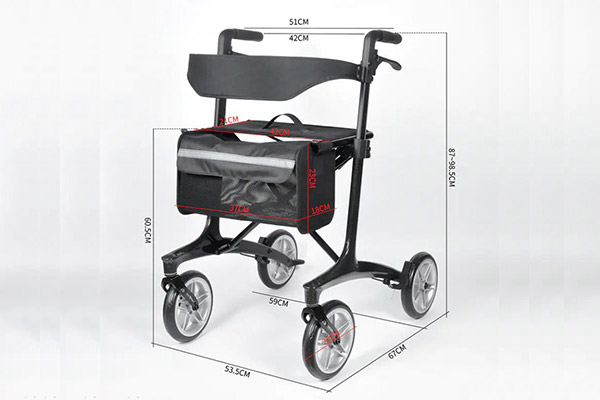
Set a shower chair aside as soon as a foot is missing or loose. That corner of the frame can no longer meet the floor as intended. A new cap has to hold the tube and sit flat; a matching opening size is only one part of that fit. Use the chair again only after the specified replacement is installed and checked.
Start with the model code, then photograph the label, exposed leg end and old foot if it is available. A part sold as “universal” still needs confirmation for this chair from its maker or a qualified service provider.
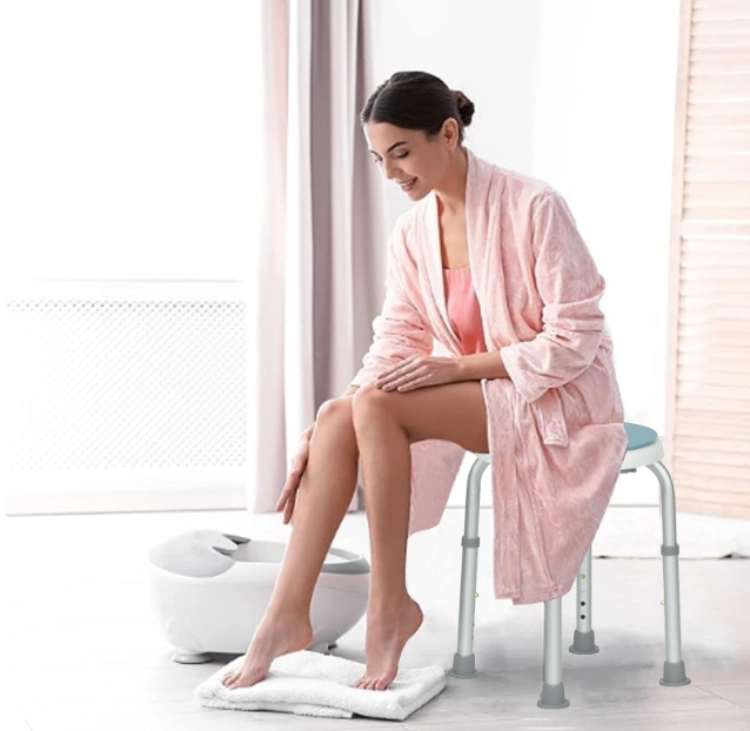
Key Takeaways
In Beiqin’s bathing range, an aluminum-frame stool, a height-adjustable shower chair and a rotating seat may all look similar in a parts listing. Some have backrests or arm supports; a small backless stool may have a quite different leg end. That is why I would identify the chair before comparing caps.
Look under the seat and along the frame for the label, and photograph it as found. If the code has worn away, provide the order number or approximate purchase date. The product name alone may span more than one revision.
If the chair is from Beiqin, send support the model code at the outset. The range of frames is why a generic request for “shower chair feet” is hard to answer; the code narrows it to the right assembly.
Send a full-chair photo and close views of each leg end. The close views distinguish rubber feet from tub-edge pads or casters, which are different support systems despite similar catalog descriptions. The whole-chair view gives the supplier context for the assembly.
Include the damaged end with the leg attached and explain how the foot failed. A loose cap cannot show its installed angle.
Maybe look at the manual before attempting to kick a foot off. If removal is permitted, record the outer diameter of the metal tube where it enters the capto within millimetres. You could lay a ruler next to the tube in an image. The old foot could be part of the research, maybe with a sleeve so without being hard from outside.
However, the leg has to be inserted into different foot enough that they seat as designed. Define both tube diameter and insertion depth for the supplier to match part inner shape. An aged cap will display some design, but should not be relied upon as an accurate reflection of split or stretched rubber. An old cap may display the design, but stretched or missing rubber should not be used as a true measuring instrument.
A listing may state 22 mm and the pipe might be evaluated as being 22 mm, however in-circuit foot can twofold dare to dream wrong. Its sleeve, seating depth or angle of contact with the floor might differ. That simple sentence: “Have the supplier match your mechanical model number and revision of that model, not just those two numbers.” Get the supplier to supply equivalent, actual model and revision; not just those two numbers.
A replacement should go on as the maker directs —– with no warmth, cutting or material stuffed around the tube. If the old cap is hung up, then exerting pressure to ensure it comes off could interfere with those adjustment parts in that leg. This sounds like a job for an actual service provider. That is something for a qualified service provider.
Place the empty seat on a flat surface, take a picture from the side before removing old part. That shot gives a clearer view of the leg’s approach to the floor than does a photograph showing an unsecured cap. The base of a fitted replacement must contact the floor at that angle.
Don’t mind the first to contact floor. You cannot interchange a wide base, narrow tip and suction-style foot just because each fits over the tube. Utilize the designated for enrollment or get written approval of some form. Never run a dubious fit by someone sitting. Never fit with someone sitting.
The 103C rotating shower stool has a round seat with 360-degree rotation. Its aluminum frame supports a seat with an anti-slip texture and smooth rounded edges. Height adjusts by pushbutton and assembly requires no tools. Net weight: 1.7 kg. Maximum user weight: 120 kg. Confirm spare-foot size separately.
The 112A swivel bath chair with backrest has an aluminum frame, backrest and 360-degree rotating seat. Net weight is 3.4 kg; overall dimensions are 38 × 38 × 62–77 cm. Maximum user weight is 136 kg. The dimension range is for the full chair. It does not tell you the diameter of a foot or the seat height.
Both 103C and 112A swivel, but that feature does not establish a shared foot. Order against the exact model.
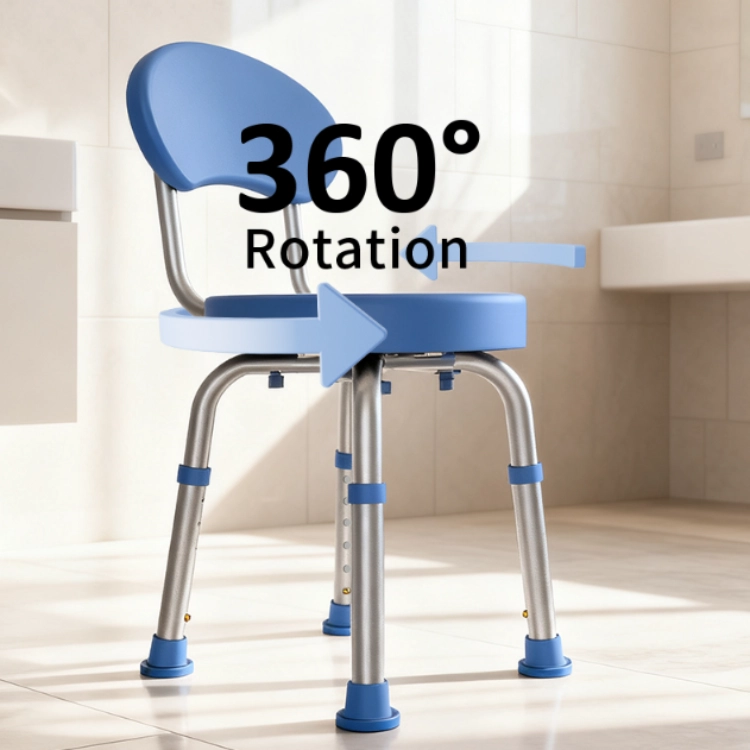
The curved seat, drainage holes and shower-head clip point to a 201A. This height-adjustable aluminum-frame chair weighs 1.7 kg net, has a 136 kg maximum user weight and measures 52 × 31 × 38–54 cm overall. Use those numbers to check the model, not to order a cap by its presumed diameter.
The backless 101A uses an aluminum frame, HDPE seat, height adjustment and tool-free assembly. Its tips are slip-resistant. Net weight is 1.5 kg, maximum user weight 120 kg, and overall dimensions 32 × 33 × 35.5–47.5 cm as height changes. That profile can confirm the model, but cannot prove its tips fit a different chair.
While checking the foot, look over the rest of the chair too: the tube, joints, seat and height buttons. If the tube is bent or damaged at the cap, a new rubber end will not solve the problem. Stop using the chair and arrange an inspection.
Place the empty chair on a level floor after fitting the confirmed part. All supports should contact the floor without rocking. If the frame moves, have it checked; do not hide the fault with a shim or by bending a leg.
Suppose the new cap stands higher than the other three. Shortening it would mask a possible wrong part, incomplete insertion or damaged frame. Checking the empty chair can reveal that mismatch; it does not establish load capacity or approve the part for use.
The foot right is all one detail. Also showing the effects of floor, route into shower and position of grab bars on a transfer. Medlineplus provides bathroom safety guidance for adults. That assessment of the room for that person who needs it, will also need to be made by an occupational therapist; replacement feet are not able to make a chair or layout fit-for-purpose.
If the user remains unsteady, look beyond the chair. Vision, medicines and muscle weakness can affect balance, as discussed in the Medlineplus overview of fall risks. A secure foot cannot address those factors on its own.
Send the model code, leg photos and measurements together so the supplier can check the assembly and fitting instructions.
| Information to send | What it helps establish |
| Model label and order reference | Exact chair and possible revision |
| Full chair and leg-end photographs | Support layout and foot shape |
| Tube outside diameter with units | Size of the tube entering the foot |
| Original foot and any internal insert | Construction that needs matching |
| Description of wear or damage | Whether a foot replacement is enough |
Ask Beiqin whether the foot for this exact chair is sold on its own. Request the spare-part reference and fitting directions, then keep both with the model code. The Beiqin product information and replacement-part inquiry route can help the supplier identify the right assembly.
Only when the maker or a service provider confirms that exact part for the model. Diameter is one check. The cap still has to grip the leg and sit properly against the floor at the chair’s angle.
Follow the chair’s service guidance on replacing one foot or a set, and tell the supplier if the other feet are worn or sit at different heights. Do not mix designs to level the seat. A chair that still rocks after fitting needs a frame inspection.