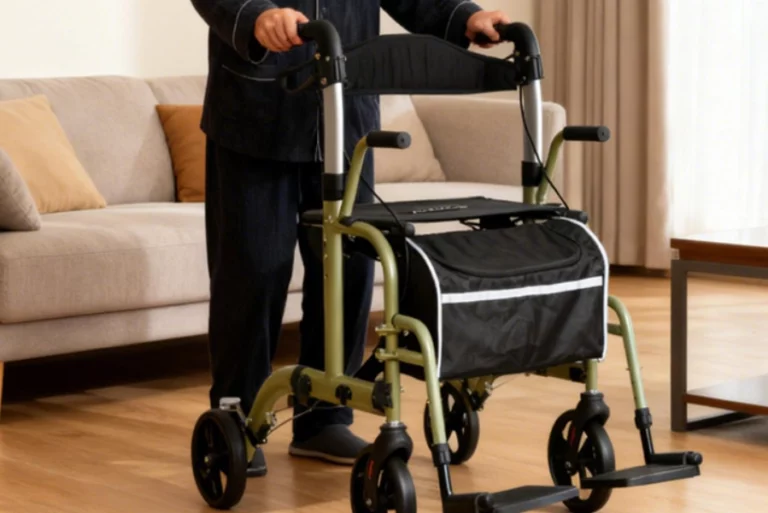
Trunk volume is a poor first filter for a folding rollator. The opening may be the limit, especially when wheels or arm supports must turn between the sill and parcel shelf. Measure the car first, then compare the rollator in its transport configuration.
“Folded dimensions” only help if you know what was removed. Ask whether wheels, handles and backrest remain fitted, and request a photo. Compare that setup with the trunk opening and storage space.
Key Takeaways
At the open trunk, the middle is rarely the only useful measuring point. Record the least clear width, including the lower corners, and measure the opening height above the sill where the frame will pass.
Take a photo while the trunk is open. Mark the shelf, glass, lid and sill wherever they cut into the loading route; if the opening is an odd shape, add a quick sketch showing the turn.
Measure with the seats set as they normally travel and allow for the luggage usually carried. A fit that depends on folding a passenger seat may be workable for an occasional trip, but check whether it suits the regular journey.
A cardboard outline at the quoted dimensions is a quick way to rule out a clear mismatch. It will miss protruding parts, though, and it cannot show whether the frame will turn past the opening. For a tight fit, try the rollator itself.
Folded dimensions are the device’s outside length, width and height in a named transport configuration. Request all three measurements and a photo showing the measuring points and every attached accessory.
Side-folding frames often narrow more than they shorten. “Compact” does not tell you which measurement changed. On an upright model, measure across the arm supports as well. They may catch on the opening before the frame does.
A shipping carton includes packing and sometimes loose parts, so its outside size is a shipping figure. It cannot stand in for the rollator’s folded size. If the trunk opening and the quoted folded frame are both 72 cm wide, there is no spare width at all. The frame may also need to turn. Ask for its folded measurement and check the whole path into the car.
Choose the walking aid for the user’s needs first. A clinician or qualified supplier can help with selection and using a walker. Then check the lift: who will do it, where they can grip and how high the sill sits.
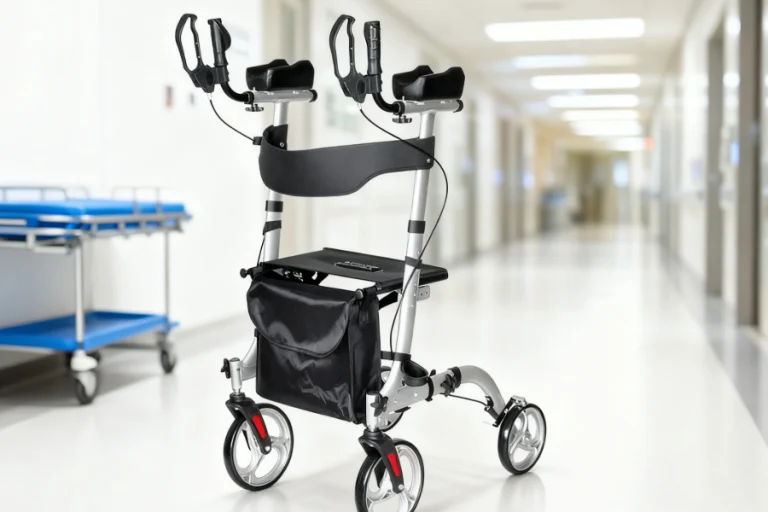
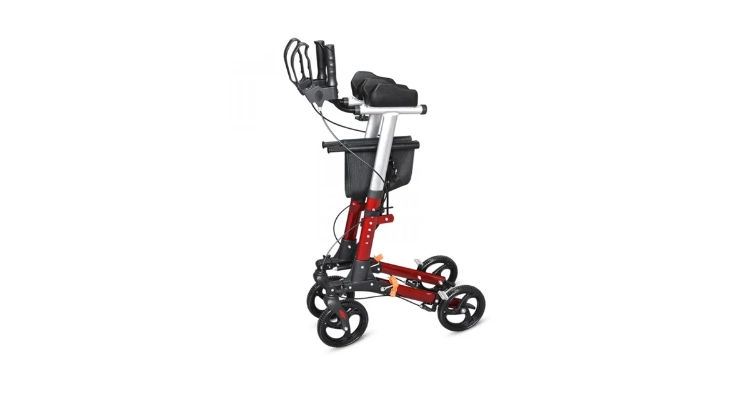
For example, the 1003C folding stand-up rollator has an aluminum frame, padded arm supports, seat and loop-lock brakes. Its assembled size is 52 × 67 × 111–123 cm; net weight is the device weight, which is 9.5 kg for this model. The packed unit weighs 11.4 kg and its carton measures 42 × 23 × 75 cm, with one unit per carton. Maximum user weight is 136 kg. Confirm folded dimensions separately for the transport configuration you need.
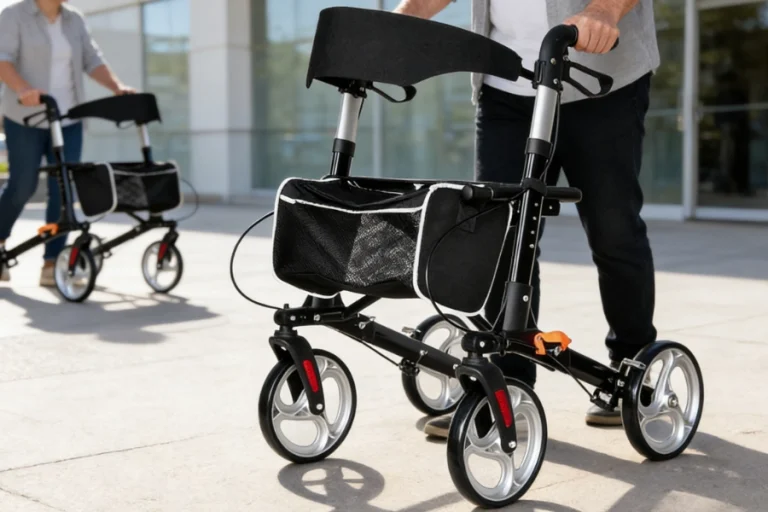
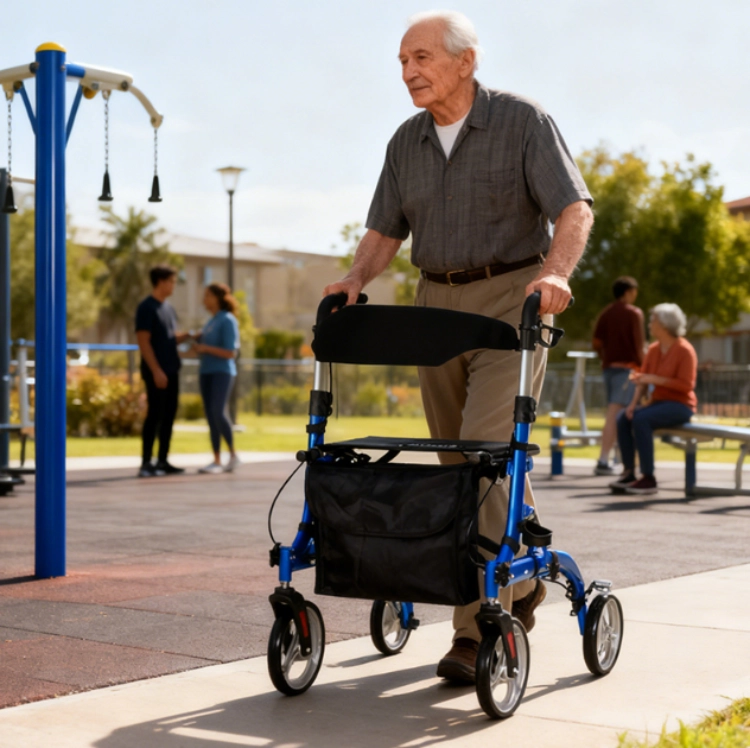
The 1006F is the rollator with shock absorbers. Its aluminum frame folds for storage and transport, and it has adjustable handles, a padded backrest, a seat and storage below it. Open dimensions are 56 × 71 × 85–102 cm (L × W × H). The net device weight is 8.6 kg, gross shipping weight 10.1 kg and carton size 45 × 24 × 57 cm. Maximum user weight is 136 kg. The folded length, width and height still have to be obtained separately.
For lifting, compare net weights. Even the lighter frame may be awkward when the sill is high. Use net weight for the lift, and keep the packed weight and carton size for shipping calculations. Neither shipping figure answers the car-fit question.
| Model | Net device weight | Gross shipping weight | Carton size |
| 1003C | 9.5 kg | 11.4 kg | 42 × 23 × 75 cm |
| 1006F | 8.6 kg | 10.1 kg | 45 × 24 × 57 cm |
Add folded length, width and height in the transport configuration before using this comparison to assess car fit.
The 1007B stand-up rollator with armrests has height-adjustable arm supports, padded backrest, seat and under-seat basket. Its aluminum frame folds for storage. Net device weight is 9.2 kg; gross shipping weight is 10.2 kg. One unit ships in a 42 × 23 × 75 cm carton. Maximum user weight is 136 kg. The arm supports affect its outside shape; ask for a folded-unit photo.
The 1003C has a bag beneath the seat. Confirm whether it stays fitted in the quoted dimensions. The folded photo should show this and any other accessories that remain attached.
Do the trial with the car that will carry it and the person who usually does the lift. The rollator user needs stable support while the frame is in the trunk. Park on level ground and check the lift back out as well as the way in.
Fold it in the order shown in the manual, keeping fingers away from the joints. Use the lifting point specified there. Do not lift by a brake cable or fabric bag; if the proper grip is unclear, ask the supplier.
Watch where the wheels and arm supports pass the opening. If either catches, pull the frame back and change the angle instead of pushing against the trim. Then close the lid carefully to check clearance and secure the rollator as the vehicle instructions require.
On unloading, reattach anything removed for transport. Open the frame fully and check the lock and brakes before walking. If getting it back out is too difficult, plan for help or a different transport setup even if it fitted inside.
Keep the handover in that trial. A person who relies on the rollator still needs suitable support while it is in the car. The CDC’s fall prevention resources can help the user and care team consider fall risk alongside the transport arrangement. A successful trunk-fit test does not establish that a walking aid suits its user.
When asking Beiqin about fit, send the measurements and configuration together:
Find out more about Beiqin or use the product inquiry form to request measurements of the exact model and revision.
For distributors, record folded dimensions beside the model revision and keep carton size in its own field. That prevents shipping data being mistaken for the frame size a customer needs. After confirming transport, these rollator feature checks for buyers can support the wider product review.
No. A small carton can mean that accessories are packed separately. The relevant figures for the car are the complete rollator’s normal folded measurements, its net weight and the height of the loading sill. Record the box size for freight and storage.
No. Follow the manual to open the frame completely and confirm that it locks. If the lock will not engage, do not walk with the rollator; have it checked first.